Learn how to accelerate app development by using GitHub Copilot and GitHub Copilot Chat in a Visual Studio Code environment.


Learn how to accelerate app development by using GitHub Copilot and GitHub Copilot Chat in a Visual Studio Code environment.

This learning path helps prepare you for the APL-1008 Administer Active Directory Domain Services modern credential. You’ll learn how to create, deploy, and maintain an Active Directory Domain Services environment.
This course teaches IT Professionals how to manage core Windows Server workloads and services using on-premises, hybrid, and cloud technologies. The course teaches IT Professionals how to implement and manage on-premises and hybrid solutions such as identity, management, compute, networking, and storage in a Windows Server hybrid environment.
You could also consider taking this Applied Skills to deepen skills in hybrid infrastructure. You can take the Applied Skills assessment to deepen your skills in managing on-premises and hybrid Windows Server environments:
– Administer Active Directory Domain Services (AZ-1008)
In this course, each module presents a scenario with an architectural challenge to be solved. You will examine available AWS services and features as solutions to the problem. You will gain insights by participating in problem-based discussions and learning about the AWS services that you could apply to meet the challenges. Over 3 days, the course goes beyond the basics of a cloud infrastructure and covers topics to meet a variety of needs for AWS customers. Course modules focus on managing multiple AWS accounts, hybrid connectivity and devices, networking with a focus on AWS Transit Gateway connectivity, container services, automation tools for continuous integration/continuous delivery (CI/CD), security and distributed denial of service (DDoS) protection, data lakes and data stores, edge services, migration options, and managing costs. The course concludes by presenting you with scenarios and challenging you to identify the best solutions
In this course, each module presents a scenario with an architectural challenge to be solved. You will examine available AWS services and features as solutions to the problem. You will gain insights by participating in problem-based discussions and learning about the AWS services that you could apply to meet the challenges. Over 3 days, the course goes beyond the basics of a cloud infrastructure and covers topics to meet a variety of needs for AWS customers. Course modules focus on managing multiple AWS accounts, hybrid connectivity and devices, networking with a focus on AWS Transit Gateway connectivity, container services, automation tools for continuous integration/continuous delivery (CI/CD), security and distributed denial of service (DDoS) protection, data lakes and data stores, edge services, migration options, and managing costs. The course concludes by presenting you with scenarios and challenging you to identify the best solutions.
The final day is an AWS Jam, a gamified event, with teams competing to score points by completing a series of challenges according to established best practices based on concepts covered in the course. You get to experience a wide range of AWS services in a series of real-world scenarios that represent common operational and troubleshooting tasks. The end result is developing, enhancing, and validating your skillsets in the AWS Cloud through real-world problem solving, exploring new services, features, and understanding how they interoperate.
On our interactive Scrum Alliance Advanced Certified Scrum Product Owner® course you’ll consider the more global aspects of product ownership, how to navigate a complex product development landscape, how to apply lean principles, and what aspects of your personal growth to focus on. This will involve learning a range of advanced tools in areas such as working with stakeholders, facilitation, collaboration techniques, scaling, advanced product validation, and advanced product backlog management.
The workshop includes interactive exercises, real-life examples, and lively discussion. It will push you, challenge you, and get you thinking. But the most effective learning, the kind that permanently changes you, happens when you apply techniques and knowledge and reflect on your results, as such, following the workshop you’ll have access to online coaching session in which you can reflect on how you are applying your knowledge and skills.
Our interactive Scrum Alliance Advanced Certified ScrumMaster® training includes thought-provoking exercises and discussion followed by applied learning at your work and written reflection. You’ll learn fundamental facilitation and coaching techniques, as well as a range of Agile and Lean values and principles with a focus on team dynamics.
We use brain friendly, science based, accelerated learning techniques to help you really learn and increase your knowledge retention.
A one-to-one coaching session is included as part of the course – a valuable opportunity to reflect and challenge yourself to become an even better ScrumMaster. Further coaching support is available if you want to explore this powerful tool for professional and personal development.
The Advanced Developing on AWS course uses the real-world scenario of taking a legacy, on-premises monolithic application and refactoring it into a serverless microservices architecture. This four-day advanced course covers advanced development topics such as architecting for a cloud-native environment; deconstructing on-premises, legacy applications and repackaging them into cloud-based, cloud native architectures; and applying the tenets of the Twelve-Factor Application methodology.
The final day is an AWS Jam, a gamified event, with teams competing to score points by completing a series of challenges according to established best practices based on concepts covered in the course. You get to experience a wide range of AWS services in a series of real-world scenarios that represent common operational and troubleshooting tasks. The end result is developing, enhancing, and validating your skillsets in the AWS Cloud through real-world problem solving, exploring new services, features, and understanding how they interoperate.
The Advanced Generative AI Development on AWS is designed for developers seeking to master the implementation of production-ready generative AI solutions on AWS. The course addresses the needs of organizations embarking on their generative AI journey and how to build comprehensive generative AI strategies that align with broader business objectives. This advanced 3-day instructor-led training builds expertise across the entire generative AI stack – from foundation models to enterprise integration patterns. In addition, you will learn about advanced data processing techniques, vector database implementation and retrieval augmentation, sophisticated prompt engineering and governance, agentic AI systems and tool integration, AI safety and security measures, performance optimization and cost management strategies, comprehensive monitoring and observability solutions, testing and validation frameworks. The course structure follows AWS’s proven model for generative AI adoption, progressing from experimentation to production-ready implementations.
This course will give you hands-on experience optimizing, deploying, and scaling a variety of production ML models. You’ll learn how to build scalable, accurate, and production-ready models for structured data, image data, time-series, and natural language text, along with recommendation systems.
In this course, you’ll explore the core principles and strategies for designing Agentic AI systems using AWS services. You’ll learn how Agentic AI differs from traditional conversational systems, and how to use tools like Amazon Q, Kiro, Amazon Bedrock Agents, and Amazon Bedrock AgentCore to build autonomous, goal-driven solutions that solve real-world problems.
This course provides learners with the essential skills to govern the design, deployment, and scaling of autonomous, Agentic AI systems. It focuses on enabling rapid innovation and accelerating speed-to-market while managing the unique risks presented by AI systems that can make decisions without constant human input.
The course is structured around the practical application of the four-phase Agentic AI Governance Maturity Roadmap (Establish, Implement, Scale, Accelerate).
The course uses a blend of presentations, detailed case-study scenarios (Cymbal Health, Cymbal Insurance, etc.), group discussions, a tabletop exercise, and quizzes to ensure effective learning. The real-world examples ensure participants can immediately connect theoretical principles to their own organizational and regulatory challenges.
The Scrum Micro Essentials course enables organisations to boost customer satisfaction while empowering teams to innovate and thrive. Covering the following modules:
Introduction to Agile and Scrum
The Scrum Framework
Scrum for Product Development
Scenario Simulation
This course provides a well-rounded introduction to key aspects of Scrum.
Course Highlights:
Duration: Half-day workshop
Format: Interactive sessions with group discussions and hands-on activities
Materials Provided: Comprehensive course materials and resources for continued learning
The Scrum Micro Essentials course enables organisations to boost customer satisfaction while empowering teams to innovate and thrive. Covering the following modules:
Introduction to Agile and Scrum
The Scrum Framework
Scrum for Product Development
Scenario Simulation
This course provides a well-rounded introduction to key aspects of Scrum.
Course Highlights:
Duration: Half-day workshop
Format: Interactive sessions with group discussions and hands-on activities
Materials Provided: Comprehensive course materials and resources for continued learning
AI Adoption for Engineering Teams is a practical one-day workshop that explores how development teams can introduce AI tools into software engineering workflows.
Participants learn where AI can support activities such as coding, debugging, testing and documentation while understanding the engineering standards, security considerations and governance required when adopting AI in development environments.
The course focuses on practical adoption strategies that help engineering teams evaluate AI tools and introduce them responsibly within existing development practices.
Duration: 1 Day – Live Virtual Instructor-Led Workshop
Also available as private team training for organisations developing software systems.

Many organisations have now introduced tools such as Microsoft Copilot into their digital workplace. Project managers and delivery teams are beginning to experiment with AI to support reporting, documentation and analysis.
However, in many organisations this use remains ad-hoc and individual, rather than embedded into how projects are actually delivered.
This advanced programme is designed as the next stage after Enhancing Project Delivery with AI – A Practical Introduction and Workshop, helping project professionals move beyond experimentation towards structured, repeatable AI-enabled project delivery.
While the introductory course focuses on understanding and practical use of AI tools, this advanced programme focuses on automation, intelligent workflows and operational integration within project environments.
Participants learn how tools such as Microsoft Copilot and the wider Microsoft ecosystem can support:
• Project schedule analysis
• Delivery insight and decision support
• Automated reporting and communication
• Intelligent workflow automation
• Integration across common project tools
The course emphasises maintaining strong governance, accountability and human judgement while embedding AI into delivery practices.
By the end of the programme, participants will understand how AI can support consistent, safe and scalable project delivery operations, not just individual productivity.
Duration: 2 Day Instructor-Led Workshop
Includes:
• 2 Days Advanced Instructor-Led Training
• Applied Post-Course Project
• Instructor Reinforcement Session
• Course Materials and Templates
Private team delivery available – please contact us for group pricing.
Artificial Intelligence is beginning to change how projects are planned, managed and delivered.
Project managers and PMO teams are increasingly exploring how AI tools can support planning, reporting, analysis and stakeholder communication. However, many organisations are still unsure how these tools should be introduced without disrupting established delivery practices or weakening governance.
This practical workshop provides project managers, programme leaders and PMO teams with a clear introduction to how AI can support modern project delivery while maintaining strong leadership, accountability and delivery discipline.
Participants will explore real examples of how AI tools can be used in project environments and gain practical techniques they can apply immediately within their own teams.
Duration: 1 Day Instructor-Led Workshop
AI-Assisted Software Engineering for Developers is a two-day practical course that explores how AI coding tools can be used to improve software development productivity while maintaining engineering quality and governance.
Participants learn how tools such as GitHub Copilot and other AI assistants can support coding, testing, debugging and documentation while ensuring that engineering standards, security and maintainability are preserved.
The course focuses on practical workflows that development teams can adopt safely when introducing AI into their software engineering processes.
Duration: 2 Days – Live Virtual Instructor-Led Training
This course explores the benefits of AlloyDB, especially compared to PostgreSQL on Cloud SQL. It will walk yo through AlloyDB’s unique architecture, and explain how to configure deployments on Google Cloud. The course is divided into two parts: AlloyDB Administration Essentials (architecture and configuration) and AlloyDB Optimization Essentials (performance tuning).
Amazon SageMaker Studio helps data scientists prepare, build, train, deploy, and monitor machine learning (ML) models quickly. It does this by bringing together a broad set of capabilities purpose-built for ML. This course prepares experienced data scientists to use the tools that are a part of SageMaker Studio, including Amazon CodeWhisperer and Amazon CodeGuru Security scan extensions, to improve productivity at every step of the ML lifecycle.
In this course, you learn how to do the kind of data exploration and analysis in Looker that would formerly be done primarily by SQL developers or analysts. You learn to leverage Looker’s modern analytics platform to find and explore relevant content in your organization’s Looker instance. You also discover how to ask questions of your data, create new metrics as needed, and build and share visualizations and dashboards to facilitate data-driven decision-making.
In this course, you’ll dive into the details of using Large Language Models (LLMs) in your applications. You’ll start by exploring the core principles that underpin prompting LLMs. Next, you will focus on Google’s latest family of models, Gemini. You’ll explore the various Gemini models and their multimodal capabilities. This includes a deep dive into effective prompt design and engineering within the Vertex AI Studio environment. Then, the course moves to application development frameworks and how to implement these concepts into your applications.
Architecting on AWS is for solutions architects, solution-design engineers, and developers seeking an understanding of AWS architecting. In this course, you will learn to identify services and features to build resilient, secure and highly available IT solutions on the AWS Cloud.
Architectural solutions differ depending on industry, types of applications, and business size. AWS Authorized Instructors emphasize best practices using the AWS Well-Architected Framework, and guide you through the process of designing optimal IT solutions based on real-life scenarios. The modules focus on account security, networking, compute, storage, databases, monitoring, automation, containers, serverless architecture, edge services, and backup and recovery. At the end of the course, you will practice building a solution and apply what you have learned.
Architecting on AWS is for solutions architects, solution-design engineers, and developers seeking an understanding of AWS architecting. In this course, you will learn to identify services and features to build resilient, secure and highly available IT solutions on the AWS Cloud.
Architectural solutions differ depending on industry, types of applications, and business size. AWS Authorized Instructors emphasize best practices using the AWS Well-Architected Framework, and guide
you through the process of designing optimal IT solutions, based on real-life scenarios. The modules focus on account security, networking, compute, storage, databases, monitoring, automation, containers, serverless architecture, edge services, and backup and recovery. At the end of the course, you will practice building a solution and apply what you have learned with confidence.
This course features a combination of lectures, design activities, and hands-on labs to show you how to use proven design patterns on Google Cloud to build highly reliable and efficient solutions and operate deployments that are highly available and cost-effective. This course was created for those who have already completed the Architecting with Google Compute Engine or Architecting with Google Kubernetes Engine course.
Learning Objectives Consider the entire range of Google Cloud Platform technologies in their plans Learn methods to develop, implement, and deploy solutions Distinguish between features of similar or related products and technologies Recognize a wide variety of solution domains, use cases, and applications Develop essential skills for managing and administering solutions Develop knowledge of solution
This course introduces participants to deploying and managing containerized applications on Google Kubernetes Engine (GKE) and other services provided by Google Cloud. Through a combination of presentations, demos, and hands-on labs, participants explore and deploy solution elements, including infrastructure components such as pods, containers, deployments, and services, as well as networks and application services. This course also covers deploying practical solutions, including security and access management, resource management, and resource monitoring.
Learn how to implement GitHub Actions and configure Azure Load Testing to automate testing app deployments.
Learn how GitHub Actions enables you to automate your software development cycle. You’ll learn how to plan automation of your software development life cycle with GitHub Actions workflows, use GitHub Actions to automatically build an application, and use GitHub Script to interact with the GitHub API.
This course provides students with the fundamental knowledge and skills to use Windows PowerShell for administering and automating administration of Windows servers. This course provides students the skills to identify and build the command they require to perform a specific task. In addition, students learn how to build scripts to accomplish advanced tasks such as automating repetitive tasks and generating reports. This course provides prerequisite skills supporting a broad range of Microsoft products, including Windows Server, Windows Client, Microsoft Exchange Server, Microsoft SharePoint Server, Microsoft SQL Server, and Microsoft System Center. In keeping with that goal, this course will not focus on any one of those products, although Windows Server, which is the common platform for all of those products, will serve as the example for the techniques this course teaches.
Prerequisites Attendees should have the following prerequisites as per courses included in the bundle: Working knowledge of distributed systems Familiarity with general networking concepts Working knowledge of multi-tier architectures Familiarity with cloud computing concepts Who Should Attend This bundle is aimed at candidates working towards the AWS Certified Solutions Architect Associate Certification. Who should take
In this course, you will learn the fundamental concepts of cloud computing and how a cloud strategy can help companies meet business objectives. It explores the advantages and possibilities of cloud computing. It also introduces addresses concepts such as security and compliance to help facilitate better discussions with line of business (LOB) professionals and executives.
This course is for individuals who seek an overall understanding of the Amazon Web Services (AWS) Cloud, independent of specific technical roles. You will learn about AWS Cloud concepts, AWS services, security, architecture, pricing, and support to build your AWS Cloud knowledge. This course also helps you prepare for the AWS Certified Cloud Practitioner exam.
The 4 day AWS Data Analytics course collection bundle combines the following courses:
– Building Data Lakes on AWS (BDLA)
– Building Batch Data Analytics Solutions on AWS (BBDAS)
– Building Data Analytics Solutions Using Amazon Redshift (BDASAR)
– Building Streaming Data Analytics Solutions on AWS (BSDASA)
These four courses together replace the Big Data on AWS course track and cover key topics covered in the exam for the AWS Certified Data Analytics – Specialty certification.
This fantastic bundle will save you over 30% discount from the original list price. Purchase the complete package for £2520!
Gain an overall understanding of AWS Cloud, independent of specific technical roles, with the fundamental-level AWS Cloud Practitioner Essentials Day. This event provides a detailed overview of cloud concepts, AWS solutions, security, architecture, pricing, and support. The event will also help you prepare for the AWS Certified Cloud Practitioner exam.
– Level: Fundamental
– Duration: 5 hours
We recommend that attendees of this event continue learning with this course:
– AWS Technical Essentials (AWSE)
Are you interested in machine learning, but not sure where to start? Join us for this session with an AWS expert and demystify the basics. Using real-world examples, you’ll learn about important concepts, terminology, and the phases of a machine learning pipeline. Learn how you can unlock new insights and value for your business using machine learning.
– Level: Fundamental
– Duration: 1.5 hours
We recommend that attendees of this event continue learning with these:
– Courses
– (!)
– MLOps Engineering on AWS (MLOE)
– Practical Data Science with Amazon SageMaker (PDSASM)
– (!)
– Resources
– AWS Ramp-Up Guide: Machine Learning
Whether you are thinking of migrating to the AWS Cloud or already have a workload running on AWS, securing your data and resources should be at the top of the list. This event introduces several AWS services that you can use to improve your current security posture. It also covers the different security design principles that will help you to plan your security approach in the AWS Cloud and provides information on resources you can use to further your knowledge around security on AWS.
– Level: Fundamental
– Duration: 1.5 hours
We recommend that attendees of this event continue learning with these:
– Courses
– AWS Security Essentials (SEC-ESS)
– (!)
– Security Engineering on AWS (AWSSO)
– Resources
– AWS Ramp-Up Guide: Security
The Advanced Architecting on AWS Jam is a gamified event, with teams competing to score points by completing a series of challenges according to established best practices based on concepts covered in the course. You get to experience a wide range of AWS services in a series of real-world scenarios that represent common operational and troubleshooting tasks.
The end result is developing, enhancing, and validating your skillsets in the AWS Cloud through real-world problem solving, exploring new services, features, and understanding how they interoperate.
The Advanced Developing on AWS Jam is a gamified event, with teams competing to score points by completing a series of challenges according to established best practices based on concepts covered in the course. You get to experience a wide range of AWS services in a series of real-world scenarios that represent common operational and troubleshooting tasks. The end result is developing, enhancing, and validating your skillsets in the AWS Cloud through real-world problem solving, exploring new services, features, and understanding how they interoperate.
The Architecting on AWS Jam is a gamified event, with teams competing to score points by completing a series of challenges according to established best practices based on concepts covered in the Architecting on AWS course. You get to experience a wide range of AWS services in a series of real-world scenarios that represent common operational and troubleshooting tasks.
The end result is developing, enhancing, and validating your skillsets in the AWS Cloud through real-world problem solving, exploring new services, features, and understand how they interoperate.
The Cloud Operations on AWS Jam is a gamified event, with teams competing to score points by completing a series of challenges according to established best practices based on concepts covered in the course. You get to experience a wide range of AWS services in a series of real-world scenarios that represent common operational and troubleshooting tasks.
The end result is developing, enhancing, and validating your skillsets in the AWS Cloud through real-world problem solving, exploring new services, features, and understanding how they interoperate.
The Developing on AWS Jam is a gamified event, with teams competing to score points by completing a series of challenges according to established best practices based on concepts covered in the course. You get to experience a wide range of AWS services in a series of real-world scenarios that represent common operational and troubleshooting tasks. The end result is developing, enhancing, and validating your skillsets in the AWS Cloud through real-world problem solving, exploring new services, features, and understanding how they interoperate
The DevOps Engineering on AWS Jam is a gamified event, with teams competing to score points by completing a series of challenges according to established best practices based on concepts covered in the course. You get to experience a wide range of AWS services in a series of real-world scenarios that represent common operational and troubleshooting tasks. The end result is developing, enhancing, and validating your skillsets in the AWS Cloud through real-world problem solving, exploring new services, features, and understanding how they interoperate.
The final day is an AWS Jam, a gamified event, with teams competing to score points by completing a series of challenges according to established best practices based on concepts covered in the course. You get to experience a wide range of AWS services in a series of real-world scenarios that represent common operational and troubleshooting tasks. The end result is developing, enhancing, and validating your skillsets in the AWS Cloud through real-world problem solving, exploring new services, features, and understanding how they interoperate.
This course is intended to provide solutions architects with the foundational knowledge required to successfully plan and perform lift and shift migrations to the AWS Cloud. In this course you will learn about methodologies for discovering, planning, performing, and tracking migrations by using various AWS tools and services.
AWS Security Essentials covers fundamental AWS Cloud security concepts, including AWS access control, data encryption methods, and how network access to your AWS infrastructure can be secured. Based on the AWS Shared Security Model, this course teaches where in the AWS Cloud you are responsible for implementing security. You’ll also learn what security-oriented services are available to you, as well as why and how the security services can help meet the security needs of your organization.
AWS Technical Essentials introduces you to essential AWS services and common solutions. The course covers the fundamental AWS concepts related to compute, database, storage, networking, monitoring, and security. You will start working in AWS through hands-on course experiences. The course covers the concepts necessary to increase your understanding of AWS services, so that you can make informed decisions about solutions that meet business requirements. Throughout the course, you will gain information on how to build, compare, and apply highly available, fault tolerant, scalable, and cost-effective cloud solutions.
The AWS Well-Architected Best Practices course will help you learn a consistent approach to evaluate architectures and implement designs from a live instructor. You’ll learn how to use the Well-Architected Review process and the AWS Well-Architected Tool to conduct reviews to identify high risk issues (HRIs). In this 1-day, classroom training course, you’ll learn to apply the five pillars of the AWS Well-Architected Framework—operational excellence, security, reliability, performance efficiency, and cost optimization—to understand the impact of design decisions. You’ll apply what you’ve learned during the course to each pillar of the Well-Architected Framework through tutorials, hands-on labs, discussions, demonstrations, presentations, and group exercises.
This course is designed for data analysts who want to learn about using BigQuery for their data analysis needs. Through a combination of videos, labs, and demos, we cover various topics that discuss how to ingest, transform, and query your data in BigQuery to derive insights that can help in business decision-making.
This learning path explores how the Azure AI and Azure Machine Learning Services integrations provided by the Azure AI extension for Azure Database for PostgreSQL – Flexible Server can enable you to build AI-powered apps.
This module guides you through the foundational concepts and practical steps required to create, test, and manage agents in Microsoft 365 Copilot Chat and SharePoint.
Azure Databricks is a cloud-scale platform for data analytics and machine learning. Data scientists and machine learning engineers can use Azure Databricks to implement machine learning solutions at scale.
This course is for developers, architects, and database engineers who want to build applications that involve complex data characteristics and millisecond performance requirements from their databases. In this course, you use AWS purpose-built databases to build a typical modern application with diverse access patterns and real-time scaling needs. By the end of the class, you should be able to describe advanced features of Amazon DynamoDB, Amazon DocumentDB (with Mongo compatibility), and Amazon ElastiCache for Redis.
In this course, you’ll learn about implementing production-ready multi-agent systems using Amazon Bedrock AgentCore, covering mulit-agent patterns, context optimization techniques, security configurations, and monitoring frameworks. You will examine the skills needed to move beyond proof-of-concept to scalable, secure, and observable agentic AI implementations. The course prepares you to design and deploy advanced agentic systems ready for real-world production environment.
In this course, you’ll explore the core principles and strategies for designing Agentic AI systems using AWS services. You’ll learn how Agentic AI differs from traditional conversational systems, and how to use tools like Strands Agents SDK, and Amazon Bedrock AgentCore to build autonomous, goal-driven solutions that solve real-world problems.
In this course, you will learn to build batch data analytics solutions using Amazon EMR, an enterprise-grade Apache Spark and Apache Hadoop managed service. You will learn how Amazon EMR integrates with open-source projects such as Apache Hive, Hue, and HBase, and with AWS services such as AWS Glue and AWS Lake Formation. The course addresses data collection, ingestion, cataloging, storage, and processing components in the context of Spark and Hadoop. You will learn to use EMR Notebooks to support both analytics and machine learning workloads. You will also learn to apply security, performance, and cost management best practices to the operation of Amazon EMR.
In this intermediate course, you will learn to design, build, and optimize robust batch data pipelines on Google Cloud. Moving beyond fundamental data handling, you will explore large-scale data transformations and efficient workflow orchestration, essential for timely business intelligence and critical reporting.
Get hands-on practice using Dataflow for Apache Beam and Serverless for Apache Spark (Dataproc Serverless) for implementation, and tackle crucial considerations for data quality, monitoring, and alerting to ensure pipeline reliability and operational excellence. A basic knowledge of data warehousing, ETL/ELT, SQL, Python, and Google Cloud concepts is recommended.
In this course, you will build a data analytics solution using Amazon Redshift, a cloud data warehouse service. The course focuses on the data collection, ingestion, cataloging, storage, and processing components of the analytics pipeline. You will learn to integrate Amazon Redshift with a data lake to support both analytics and machine learning workloads. You will also learn to apply security, performance, and cost management best practices to the operation of Amazon Redshift.
Processing streaming data is becoming increasingly popular as streaming enables businesses to get real-time metrics on business operations. This course covers how to build streaming data pipelines on Google Cloud. Pub/Sub is described for handling incoming streaming data. The course also covers how to apply aggregations and transformations to streaming data using Dataflow, and how to store processed records to BigQuery or Cloud Bigtable for analysis. Learners get hands-on experience building streaming data pipeline components on Google Cloud by using QwikLabs.
We use brain friendly, science based, accelerated learning techniques to help you really learn and increase your knowledge retention.
Enhance your technical expertise in agile product development through this Certified Scrum Developer® training course. Certified Scrum Developers (CSD®) showcase a working comprehension of Scrum and agile principles, coupled with specialized agile engineering skills acquired through rigorous training.
Tailored for product developers operating within a Scrum framework, this Certified Scrum Developer® course aims to familiarize students with vital tools and techniques in the Agile approach essential for constructing high-quality products in the iterative and incremental manner mandated by Scrum. These concepts form the core of the entire realm of agile product development.
Our interactive Scrum Alliance Certified Scrum Product Owner training will challenge you to put theory into practice through a variety of exercises and simulations, and to think through your own product ideas for yourself. As well as learning a range of techniques you’ll also gain a deeper understanding of Scrum and agile principles – not just the how but the why. It’s a potent foundation for working with Scrum and agile in your own organisation.
As Agile ways of working are increasingly adopted by organisations seeking to innovate faster and deliver better products, the majority are using Scrum as their framework. Scrum is a deceptively simple framework, but it is highly adaptive and has a significant impact on traditional organisational models. So if you’re to work successfully with it as a product owner, your knowledge needs to go deeper.
We use brain friendly, science based, accelerated learning techniques to help you really learn and increase your knowledge retention and post course you can take advantage of a one hour coaching session that is included as part of the course.
On our interactive Scrum Alliance Certified Scrum Professional® – Product Owner course you’ll learn more about the deeper elements of effective product ownership focusing you on the next level of your development – understanding how to navigate the product as a business, how to understand and navigate complex product development in context of agile ways of working as well as strengthening your skills, tools and techniques as you grow.
This will involve learning a range of advanced tools in areas such as working with customers and stakeholders, propositions, collaboration techniques, product backlog management and validation.
The workshop includes interactive exercises, real-life examples, and lively discussion. It will push you, challenge you, and get you thinking. But the most effective learning, the kind that permanently changes you, happens when you apply techniques and knowledge and reflect on your results, as such, following the workshop you’ll have access to online coaching sessions in which you can reflect on how you are applying your knowledge and skills.
Our interactive Certified Scrum Professional® – ScrumMasters (CSP-SM®) course involves a highly effective mix of exercises, discussion and, crucially, reflection – because genuine learning and personal change only happen through reflective practice. It will equip you with the knowledge and skills to work more effectively with developers, product owners and the wider organisation.
We use brain friendly, science based, accelerated learning techniques to help you really learn and increase your knowledge retention.
Each session is a combination of interactive exercises, practical real-life examples, and lively discussion and will equip you with the skills and knowledge required to be an effective coach. But the most important learning happens through application and reflection, so after the course there will be homework to practice the skills and apply the knowledge.
You’ll also receive a one-to-one coaching session – a valuable tool for taking things to the next level. You may want to access further coaching support to help apply, embed and deepen your evolving skills.
Our interactive Certified Scrum Professional® – ScrumMasters (CSP-SM®) course involves a highly effective mix of exercises, discussion and, crucially, reflection – because genuine learning and personal change only happen through reflective practice. It will equip you with the knowledge and skills to work more effectively with developers, product owners and the wider organisation.We use brain friendly, science based, accelerated learning techniques to help you really learn and increase your knowledge retention.
Each session is a combination of interactive exercises, practical real-life examples, and lively discussion and will equip you with the skills and knowledge required to be an effective coach. But the most important learning happens through application and reflection, so after the course there will be homework to practice the skills and apply the knowledge.
You’ll also receive a one-to-one coaching session – a valuable tool for taking things to the next level. You may want to access further coaching support to help apply, embed and deepen your evolving skills.
Our interactive Scrum Alliance Certified ScrumMaster® training is a great course for anybody who is new to Scrum or applying it within their organisation.
The course covers in depth the full Scrum Framework, Scrum events, accountabilities, artifacts, commitments and the values and principles that underpin it. A combination of interactive exercises, practical real-life examples, and lively discussion make this a challenging, engaging and enjoyable way to develop your understanding of Scrum. The course also covers many agile practices that support Scrum, including user stories and relative estimation.
We use brain friendly, science based, accelerated learning techniques to help you really learn and increase your knowledge retention and post course you can take advantage of a one hour coaching session that is included as part of the course.
Our interactive Scrum Alliance Certified ScrumMaster® training is a great course for anybody who is new to Scrum or applying it within their organisation.
The course covers in depth the full Scrum Framework, Scrum events, accountabilities, artifacts, commitments and the values and principles that underpin it. A combination of interactive exercises, practical real-life examples, and lively discussion make this a challenging, engaging and enjoyable way to develop your understanding of Scrum. The course also covers many agile practices that support Scrum, including user stories and relative estimation.
We use brain friendly, science based, accelerated learning techniques to help you really learn and increase your knowledge retention and post course you can take advantage of a one hour coaching session that is included as part of the course.

The Cisco Network Services Orchestrator (NSO) Administration and DevOps training continues the learning journey of the NSO Essentials for Programmers and Network Architects and NSO Advanced for Python Programmers trainings by introducing you to the system administration and DevOps focusing on NSO. This includes the robust bridge linking network automation and orchestration tools, examining the development, operation, and administration task functions. You will learn how to set up, configure, deploy, and maintain a Cisco NSO solution, and learn best practices for using DevOps. The examples shown in this training demonstrate real-world scenarios to prepare you for deployment and management of new or existing NSO instances.
The training guides you through the setup of production-ready NSO instances using system installation with access control settings, the deployment of NSO in Docker containers, and introduces modern DevOps concepts and tools such as Git and Continuous Delivery/Continuous Deployment (CI/CD). You will learn how to migrate Continuous Diagnostics and Mitigation (CDM) devices, how to build Network Configuration Protocol (NETCONF) Network Element Drivers (NEDs) from the NSO Command-Line Interface (CLI), how to handle NSO Alarms, and many more features that benefit you in your journey with Cisco NSO.
How You’ll Benefit
This training will help you:
– Install, configure, and maintain a Cisco Network Services Orchestrator solution
– Apply DevOps best practices for Cisco NSO development, operations, and administrative tasks
– Implement Layered Service Architecture (LSA) within a Cisco NSO solution
– Gain knowledge for protocols, solutions, and designs to acquire professional-level and expert-level networking roles
– Earn 32 CE credits toward recertification
If you’re wondering how the cloud can transform your business, then the Cloud Digital Leader training is for you. Designed to give you foundational knowledge about cloud technology, data, artificial intelligence, and Google Cloud products that enable digital transformation, CDL can empower you and your team(s) to contribute to cloud-related business initiatives in your organization.
Whether you’re an experienced leader or new to the cloud, CDL equips you with the tools and confidence to make a real difference.
This course teaches systems operators and anyone performing cloud operations functions how to manage and operate automatable and repeatable deployments of networks and systems on AWS. You will learn about cloud operations functions, such as installing, configuring, automating, monitoring, securing, maintaining, and troubleshooting these services, networks, and systems. The course also covers specific AWS features, tools, and best practices related to these functions.
This course teaches systems operators and anyone performing cloud operations functions how to manage and operate automatable and repeatable deployments of networks and systems on AWS. You will learn about cloud operations functions, such as installing, configuring, automating, monitoring, securing, maintaining, and troubleshooting these services, networks, and systems. The course also covers specific AWS features, tools, and best practices related to these functions.
The final day is an AWS Jam, a gamified event, with teams competing to score points by completing a series of challenges according to established best practices based on concepts covered in the course. You get to experience a wide range of AWS services in a series of real-world scenarios that represent common operational and troubleshooting tasks. The end result is developing, enhancing, and validating your skillsets in the AWS Cloud through real-world problem solving, exploring new services, features, and understanding how they interoperate.
This learning path prepares you to complete the Dynamics 365 customer experience analyst challenge project and validate your skills. You should have already completed the following modules as part of the MB-280: Dynamics 365 Customer Experience Analyst course series. If you haven’t, it’s recommended that you take some time to complete these modules before beginning the challenge project.
Use Microsoft Entra to manage access by using entitlements, access reviews, privileged access tools, and monitor access events.
Azure Database for PostgreSQL is a Platform as a Service database service in the Microsoft cloud. It bases itself on the PostgreSQL open-source relational database and includes built-in high availability, automatic backup and restore, as well as comprehensive security features. The pay-as-you-go pricing model provides predictable performance and near-instant scaling. In this learning path, you learn the main features of PostgreSQL and how they work in Azure Database for PostgreSQL. You learn about the different Azure Database for PostgreSQL implementation options, and how to configure a server for your needs.
This course teaches Azure administrators how to plan, deliver, and manage virtual desktop experiences and remote apps, for any device, on Azure. Lessons include implementing and managing networking for Azure Virtual Desktop, configuring host pools and session hosts, creating session host images, implementing, and managing FSLogix, monitoring Azure Virtual Desktop performance and health, and automating Azure Virtual Desktop management tasks. Students will learn through a mix of demonstrations and hands-on lab experiences deploying virtual desktop experiences and apps on Azure Virtual Desktop and optimizing them to run in multi-session virtual environments. Candidates of this course must have solid Azure administration skills. This course assumes prior experience, including virtualization, networking, identity, storage, backup and restore, and disaster recovery. Students should have knowledge of on-premises virtual desktop infrastructure technologies as they relate to migrating to Azure Virtual Desktop. Students are expected to have used the tools common to the Azure environment, such as the Azure PowerShell and Cloud Shell.
In this learning path, you practice configuring secure access to workloads using Azure networking.
Get started with Microsoft Sentinel security operations by configuring the Microsoft Sentinel workspace, connecting Microsoft services and Windows security events to Microsoft Sentinel, configuring Microsoft Sentinel analytics rules, and responding to threats with automated responses.
The course is designed to enable cybersecurity professionals, particularly those in SOC/CERT/CSIRT and Security Analysts roles, to use XDR.
The course reviews XDR intricacies, from fundamental components to advanced strategies and techniques, including skills needed to navigate case management, platform automation, and orchestrate cybersecurity excellence
XDR is the industry’s most powerful extended detection and response platform. You will gain hands-on expertise in endpoint management, case management, forensic analysis and platform automation. Throughout this course, you will explore the key features of Cortex XDR.
This course will utilize the Simulated Lab Environment, which is embedded within The Learning Center (TLC).
This 3-day instructor-led course provides in-depth training on Cortex XDR, Palo Alto Networks’ powerful extended detection and response platform. You will gain hands-on expertise in security operations, incident investigation, and system optimization to effectively protect modern environments. Throughout this course you will explore the key features of Cortex XDR.
The course is designed to enable cybersecurity professionals, particularly those in SOC/CERT/CSIRT and engineering roles, to use XDR.
The course reviews XDR intricacies, from fundamental components to advanced strategies and techniques, including skills needed to configure security integrations, develop workflows, manage indicators, and optimize dashboards for enhanced security operations.
This is an update and replacement for the previous EDU-260 course, specifically intended for the individuals who are responsible for configuring Cortex XDR and managing integrations, data ingestion, and security policies as opposed to the analysts who investigate cases and issues.
A retirement date for the EDU-260 and EDU-262 will be announced once the replacement course for EDU-262 is released (date TBA). For now the EDU-260 and EDU-262 will remain available, in addition to this new course offering
XSIAM is the industry’s most comprehensive security incident and asset management platform, offering extensive coverage for securing and managing infrastructure, workloads, and applications across multiple environments. Throughout this course, you will explore the key features of Cortex XSIAM. This course is designed to enable you to:
– Investigate incidents, analyze key assets and artifacts, and interpret the causality chain.
– Query and analyze logs using XQL to extract meaningful insights.
– Utilize advanced tools and resources for comprehensive incident analysis.
The course is designed to enable cybersecurity professionals, particularly those in SOC/CERT/CSIRT and Security Analysts roles, to use XSIAM.
The course reviews XSIAM intricacies, from fundamental components to advanced strategies and techniques, including skills needed to navigate case management, automation, and orchestrate cybersecurity excellence.
With this release, Palo Alto are now replacing Cortex XSIAM for Security Operations and Automation (EDU-270) with the following two courses:
– Cortex XSIAM for Investigation and Analysis (2- day course for XSIAM analysts)
– Cortex XSIAM: Security Operations, Integration, and Automation (3-day course for XSIAM engineers)
Students may wish to take only one or both courses as applicable to their role
XSIAM is the industry’s most comprehensive security incident and asset management platform, offering extensive coverage for securing and managing infrastructure, workloads, and applications across multiple environments.
Throughout this course, you will explore the key features of Cortex XSIAM.
This course is designed to enable you to:
– Describe how endpoint agents, XDR collectors, NGFWs, and Broker VMs secure networks and devices.
– Query and analyze logs using XQL for data ingestion and detection.
– Configure Threat Intel Management features, automate workflows, and apply EDLs and indicator rules.
With this release, Palo Alto are now replacing Cortex XSIAM for Security Operations and Automation (EDU-270) with the following two courses:
– Cortex XSIAM for Investigation and Analysis (2- day course for XSIAM analysts)
– Cortex XSIAM: Security Operations, Integration, and Automation (3-day course for XSIAM engineers)
Students may wish to take only one or both courses as applicable to their role
The Palo Alto Networks Cortex XSOAR: Engineering Security Automation Solutions course is a four-day instructor-led training with a blend of lectures and hands-on labs. This training will enable students to use Cortex XSOAR to:
– Conduct incident investigation and response activities on a phishing campaign
– Create custom dashboards and generate reports
– Install multiple engines and configure a load balancing group
– Use built-in and external integrations to ingest incidents and automate security processes
– Plan and implement an automation use case by building playbooks and automation scripts
This is an update and replacement for the previous (EDU-380) Cortex XSOAR: Automation and Orchestration. Private EDU-380 classes (based on Cortex XSOAR 6.8) are available upon request.
In this learning path, you will learn how to create custom copilots with Copilot Studio and will get the opportunity to practice your skills in a guided project.
Create your own data model and canvas app to support a scenario for a fictional company. You re provided high-level specifications on the custom tables, columns and canvas app needed to complete this project.
In this learning path, you practice building model-driven apps by using Microsoft Power Apps. The skills validated include creating Dataverse tables, modifying forms and views, and configuring a model-driven app. The scenario in this experience represents real-world challenges faced by individuals with business-specific expertise who build model-driven apps.
This course covers cybersecurity essentials, from foundational terms and frameworks to practical application on Google Cloud. You will learn to differentiate between traditional and modern AI-powered security, analyzing how AI accelerates threat detection, investigation, and response. Gain critical skills to protect cloud environments and evaluate the transformative impact of AI in security operations.
Data Engineering on AWS is a 3-day intermediate course, designed for professionals seeking a deep dive into data engineering practices and solutions on AWS. Through a balanced combination of theory, practical labs, and activities, participants learn to design, build, optimize, and secure data engineering solutions using AWS services. From foundational concepts to hands-on implementation of data lakes, data warehouses, and both batch and streaming data pipelines, this course equips data professionals with the skills needed to architect and manage modern data solutions at scale.
Get hands-on experience with designing and building data processing systems on Google Cloud. This course uses lectures, demos, and hands-on labs to show you how to design data processing systems, build end-to-end data pipelines, analyze data, and implement machine learning. This course covers structured, unstructured, and streaming data.
This 2-day course introduces learners to the data integration capability of Google Cloud using Cloud Data Fusion. In this course, we discuss the challenges of data integration and the need for a data integration platform (middleware). We then examine how
Cloud Data Fusion can help effectively integrate data from a variety of sources and formats and generate insights. We look at the main components of Cloud Data Fusion and how they work, how to process batch and streaming data in real time with visual pipeline design, rich metadata and data lineage tracking, and how to deploy data pipelines on various runtime engines.
In this course, you will learn concepts, strategies, and best practices for designing a cloud-based data warehousing solution using Amazon Redshift, the petabyte-scale data warehouse in AWS. We will demonstrate how to collect, store, and prepare data for the data warehouse by using other AWS services, such as Amazon DynamoDB, Amazon EMR, Amazon Kinesis Firehose, and Amazon Simple Storage Service (Amazon S3). We will also explore how to use business intelligence (BI) tools to perform analysis on your data.
In this course, you learn about the internals of BigQuery and best practices for designing, optimizing, and administering your data warehouse. Through a combination of lectures, demos, and labs, you learn about BigQuery architecture and how to design optimal storage and schemas for data ingestion and changes. Next, you learn techniques to improve read performance, optimize queries, manage workloads, and use logging and monitoring tools. You also learn about the different pricing models. Finally, you learn various methods to secure data, automate workloads, and build machine learning models with BigQuery ML.
Designed for leaders and business decision makers, this course will help you explore opportunities the cloud can provide to transform your business. You’ll learn how cloud technology, data, and machine learning applications are helping businesses
reimagine their daily work. You’ll uncover new possibilities in your data strategy and learn to think like a data engineer. You’ll also learn how to translate business challenges into machine learning use cases and vet them for feasibility and impact.
Implement the Microsoft Defender for Endpoint environment to manage devices, perform investigations on endpoints, manage incidents in Defender XDR, and use Advanced Hunting with Kusto Query Language (KQL) to detect unique threats.
In this learning path, you prepare for the Applied Skill, Deploy and administer Linux virtual machines on Microsoft Azure.
In this learning path, you practice implementing Azure Monitor to collect, analyze and act on monitoring telemetry from Azure environments. You learn to configure and interpret monitoring for virtual machines, networking, and web applications.
In this learning path, you’re introduced to Azure Arc-enabled servers. You’ll cover Arc-enabled server deployment, updates to Arc-enabled servers using Azure Update Manager and configuring Microsoft Defender for Cloud for Azure Arc-enabled servers.
Develop the skills necessary to configure a secure deployment solution for cloud-native apps. Learn how to build, deploy, scale, and manage containerized cloud-native apps using Azure Container Apps, Azure Container Registry, and Azure Pipelines.
In this course, you’ll learn to use the Google Agent Development Kit to build complex, Multi-Agent Systems. You will build agents equipped with tools, and connect them with parent-child relationships and flows to define how they interact. You’ll run your agents locally and deploy them to Vertex AI Agent Engine to run as a managed agentic flow, with infrastructure decisions and resource scaling handled by Agent Engine.
Dynamics 365 Customer Insights helps organizations deliver exceptional experiences personalized to every customer. In this course, students will learn how to work with key features of Customer Insights – Data and Customer Insights – Journeys. First, students will learn about the business value of using a customer data platform. They will ingest data into Customer Insights – Data, create unified customer profiles, and create segments to help target specific audiences. Then, students will build impactful and personal experiences using Customer Insights – Journeys. They will create marketing assets like emails and text messages and deliver them via segment- and trigger-based journeys. This course is part of a four-course series (MB-280T01-T04) aligning to the MB-280 certification exam.
This course teaches developers how to create application using the SQL API and SDK for Azure Cosmos DB. Students will learn how to write efficient queries, create indexing policies, manage and provisioned resources, and perform common operations with the SDK.
This course teaches Network Engineers how to design, implement, and maintain Azure networking solutions. This course covers the process of designing, implementing, and managing core Azure networking infrastructure, Hybrid Networking connections, load balancing traffic, network routing, private access to Azure services, network security and monitoring. Learn how to design and implement a secure, reliable, network infrastructure in Azure and how to establish hybrid connectivity, routing, private access to Azure services, and monitoring in Azure.
You could consider taking these Applied Skills to emphasize key skills like monitoring and security, which are essential for network engineers. Use them to bridge to practical, real world skills application. You can take the Applied Skills assessment as a focus area or prep for the certification:
– Deploy and configure Azure Monitor (AZ-1004)
– Secure Azure services and workloads with Microsoft Defender for Cloud regulatory compliance controls (SC-5002)
This course provides the knowledge and skills to design and implement DevOps processes and practices. Students will learn how to plan for DevOps, use source control, scale Git for an enterprise, consolidate artifacts, design a dependency management strategy, manage secrets, implement continuous integration, implement a container build strategy, design a release strategy, set up a release management workflow, implement a deployment pattern, and optimize feedback mechanisms
You could also consider the below Applied Skill as a security-focused component alongside your AZ-400 course to validate security in DevOps Pipelines. For additional specialization you can also take the Applied Skills assessment:
– Implement security through a pipeline using Azure DevOps (AZ-2001)
This learning path provides a comprehensive guide to designing and implementing platform engineering within modern enterprises. It covers the foundational principles, strategic alignment with business goals, and the practical aspects of building scalable, secure, and future-proof platforms. By following this path, learners will gain the knowledge and skills needed to enhance developer productivity, ensure operational excellence, and drive continuous innovation.
Learn how to operate machine learning solutions at cloud scale using Azure Machine Learning. This course teaches you to leverage your existing knowledge of Python and machine learning to manage data ingestion and preparation, model training and deployment, and machine learning solution monitoring with Azure Machine Learning and MLflow.

The Designing and Implementing Cloud Connectivity (ENCC) training helps you develop the skills required to design and implement enterprise cloud connectivity solutions. You will learn how to leverage both private and public internet-based connectivity to extend the enterprise network to cloud providers, such as Amazon Web Services (AWS), Microsoft Azure, and Google Cloud Platform (GCP). You will explore the basic concepts surrounding public cloud infrastructure and how services like Software as a Service (SaaS), Direct Internet Access (DIA), and Cisco Umbrella can be integrated. You will practice how to analyze and recommend connectivity models that are scalable, resilient, secure, and provide the best quality of experience for users. You will learn to implement both Internet Protocol Security (IPsec) and Software-Defined Wide-Area Network (SD-WAN) cloud connectivity, as well as build overlay routing with Open Shortest Path First (OSPF) and Border Gateway Protocol (BGP). You will also implement control and data policies across the SD-WAN fabric and integrate Cisco Umbrella cloud security. Finally, you will practice troubleshooting cloud connectivity issues relating to IPsec, SD-WAN, routing, application performance, and policy application.
This training prepares you for the 300-440 ENCC v1.0 exam. If passed, you earn the Cisco Certified Specialist–Enterprise Cloud Connectivity certification and satisfy the concentration exam requirement for the Cisco Certified Network Professional (CCNP) Enterprise certification.
How You’ll Benefit
This training will help you:
– Develop the skills required to design and implement enterprise cloud connectivity solutions
– Learn how to apply the virtual private network (VPN) and overlay networking technology, including Cisco Catalyst SD-WAN to extend the enterprise network to cloud providers, such as AWS, Microsoft Azure, and GCP using both private connectivity services and public internet as an underlay
– Examine the solutions for optimizing access to SaaS cloud providers and the workflows for diagnosing and troubleshooting cloud connectivity issues
– Gain knowledge for protocols, solutions, and designs to acquire professional-level and expert-level enterprise roles
– Prepare for the 300-440 ENCC v1.0 exam
– Earn 32 CE credits toward recertification
What to Expect in the Exam
300-440 ENCC: Designing and Implementing Cloud Connectivity is a 90-minute exam associated with the Cisco Certified Specialist–Enterprise Cloud Connectivity certification and satisfies the concentration exam requirement for the CCNP Enterprise certification.
The multiple-choice format tests your knowledge of designing and implementing cloud connectivity, including:
– Architecture models
– IPsec
– SD-WAN
– Operation
– Design
AWS offers a broad portfolio of storage services and solutions with diverse capabilities for storing, accessing, and protecting your data. In this course, you will learn where, how, and when to take advantage of these different service offerings. You will learn which services to consider when looking to solve your data storage challenges. You will learn how to best evaluate your options in selecting the appropriate AWS storage service to meet your use case and business requirements. You will also gain a better understanding of how to store, manage, and protect your data in the cloud. Through a series of hands-on exercises that demonstrate the ease and power of AWS platform, you will learn how to quickly provision powerful storage solutions in minutes.
This course includes presentations, hands-on labs, demonstrations, and group exercises.
Generative Artificial Intelligence (AI) is becoming more functional and accessible, and AI agents are a key component of this evolution. This learning path will help you understand the AI agents, including when to use them and how to build them, using Azure AI Agent Service and Semantic Kernel Agent Framework. By the end of this learning path, you will have the skills needed to develop AI agents on Azure.
In this learning path, you ll see how Azure AI Document Intelligence solutions can enable you to capture data from typed or hand-written forms. You ll also learn how to build a solution for your custom form types and integrate that solution into an Azure Cognitive Search pipeline. You ll learn how to:
– Design a solution that analyzes your business forms by using Azure AI Document Intelligence.
– Create a solution that analyzes common documents by using Document Intelligence.
– Create a solution that analyses different custom form types by using Document Intelligence.
– Include an Azure AI Document Intelligence service as a custom skill in an Azure Cognitive Search pipeline.
This learning path helps prepare you for Exam AI-102: Designing and Implementing a Microsoft Azure AI Solution.
AI-102: Develop AI solutions in Azure is intended for software developers wanting to build AI infused applications that leverage Azure AI Foundry and other Azure AI services. Topics in this course include developing generative AI apps, building AI agents, and solutions that implement computer vision and information extraction. The course will use C# or Python as the programming language.
You could also consider taking these these Applied Skills to validate practical experience in specific AI workloads. They are subsets of the AI-102 certification. If you only need to focus on one type of AI solution (e.g. Computer Vision) look at taking the relevant Applied Skill credential alongside the certification course. You can take the Applied Skills assessment as a focus area or for prep for the certification:
– Develop AI information extraction solutions in Azure (AI-3002)
– Develop natural language solutions in Azure (AI-3003)
– Develop computer vision solutions in Azure (AI-3004)
This module explores using GitHub Copilot and GitHub Copilot Chat suggestions to create new code. Autocompletion and code update suggestions are generated, managed, and implemented using the GitHub Copilot extensions for Visual Studio Code.
Computer vision is an area of artificial intelligence that deals with visual perception. Azure AI includes multiple services that support common computer vision scenarios.
Conversational Agents, part of AI Applications, is an intelligent, conversational (GUI) interface. Conversational Agents uses an AI development system with access to SDKs and APIs in multiple languages. In this course, you will learn how to leverage Conversational Agents to design and build conversational agents on Google Cloud.
This learning path prepares you for the task of developing data-driven applications by using Microsoft Azure SQL Database.
You’ll learn how to create and configure an Azure SQL Database, build and deploy database projects using GitHub Actions and Azure Pipelines, and automate the publishing process. Additionally, you’ll explore how to use Data API builder for Azure SQL Database and develop a data API with Azure Web Apps and Static Web App.
Furthermore, you’ll gain skills in importing data via an external REST endpoint, exporting data using an Azure Function, and securing an Azure SQL Database. These essential skills will empower you to effectively develop and manage applications using Azure SQL Database.
In this course we discuss the tasks needed to fulfill the role of developer in Dynamics 365 Finance and Operations Apps. The Dynamics 365 Finance and Operations apps developer is a key technical resource that implements and extends the application to meet the requirements of the business.
Generative Artificial Intelligence (AI) is becoming more accessible through comprehensive development platforms like Azure AI Foundry. Learn how to build generative AI applications that use language models to chat with your users.
Natural language solutions use language models to interpret the semantic meaning of written or spoken language, and in some cases respond based on that meaning. You can use the Language service to build language models for your applications, and explore Azure AI Foundry to use generative models for speech.
This course teaches developers how to create end-to-end solutions in Microsoft Azure. Students will learn how to implement Azure compute solutions, create Azure Functions, implement and manage web apps, develop solutions utilizing Azure storage, implement authentication and authorization, and secure their solutions by using KeyVault and Managed Identities. Students will also learn how to connect to and consume Azure services and third-party services, and include event- and message-based models in their solutions. The course also covers monitoring, troubleshooting, and optimizing Azure solutions.
You could also consider this Applied Skill to provide real-world experience with cloud native applications, focusing on containerized app development: Deploy cloud-native apps using Azure Container Apps (AZ-2003)
Learning Objectives Identify the purpose and value of Google Cloud’s Apigee API Platform. Develop a good understanding of Google Cloud’s Apigee API Platform terminology and organizational model. Interact with Google Cloud’s Apigee API Platform. Solve scenarios by leveraging APIs, recommended practices, and an API-first strategy. Understand and put in practice the API lifecycle. Identify capabilities
In this course, you learn about Cloud Functions, Google’s serverless, fully-managed functions as a service (FaaS) product. With Cloud Functions, you implement single-purpose functions that respond to HTTP requests and process events from your cloud infrastructure.
This course introduces the Cloud Run serverless platform for running applications. In this course, you learn about the fundamentals of Cloud Run, its resource model, and the container lifecycle. You learn about service identities, how to control access to services, and how to develop and test your application locally before deploying it to Cloud Run. The course also teaches you how to integrate with other services on Google Cloud so you can build full-featured applications.
Learn how to design, develop, and deploy applications that seamlessly integrate components from the Google Cloud ecosystem. This course uses lectures, demos, and hands-on labs to show you how to use Google Cloud services and pre-trained machine learning APIs to build secure, scalable, and intelligent cloud-native applications.
This course empowers you to develop scalable, performant Looker Modeling Language (LookML) models that provide your business users with the standardized, ready-to-use data that they need to answer their questions. Upon completing this course, you will be able to start building and maintaining LookML models to curate and manage data in your organization’s Looker instance.
In this advanced two-day course, software developers learn to build and customize AI solutions by using Amazon Bedrock programmatically. Through hands-on exercises and labs, participants will invoke foundation models through Amazon Bedrock APIs, implement Retrieval Augmented Generation (RAG) patterns with Amazon Bedrock Knowledge Bases, and develop AI agents with tool integration. The course focuses on the practical implementation of prompt engineering techniques, responsible AI practices with Amazon Bedrock Guardrails, open source framework integration, and architectural patterns for real-world business applications.
Learning Objectives Developing on AWS helps developers understand how to use the AWS SDK to develop secure and scalable cloud applications. The course provides in-depth knowledge about how to interact with AWS using code and covers key concepts, best practices, and troubleshooting tips. This course teaches you how to: Set up the AWS SDK and
This course teaches experienced developers how to programmatically interact with AWS services to build web solutions. It guides you through a high-level architectural discussion on resource selection and dives deep into using the AWS Software Development Kits (AWS SDKs) and Command Line Interface (AWS CLI) to build and deploy your cloud applications. You will build a sample application during this course, learning how to set up permissions to the development environment, adding business logic to process data using AWS core services, configure user authentications, deploy to AWS cloud, and debug to resolve application issues. The course includes code examples to help you implement the design patterns and solutions discussed in the course. The labs reinforce key course content and help you to implement solutions using the AWS SDK for Python, .Net, and Java, the AWS CLI, and the AWS Management Console.
The final day is an AWS Jam, a gamified event, with teams competing to score points by completing a series of challenges according to established best practices based on concepts covered in the course. You get to experience a wide range of AWS services in a series of real-world scenarios that represent common operational and troubleshooting tasks. The end result is developing, enhancing, and validating your skillsets in the AWS Cloud through real-world problem solving, exploring new services, features, and understanding how they interoperate
This course gives developers exposure to and practice with best practices for building serverless applications using AWS Lambda and other services in the AWS serverless platform. You’ll use AWS frameworks to deploy a serverless application in hands-on labs that progress from simpler to more complex topics. You will use AWS documentation throughout the course to develop authentic methods for learning and problem-solving beyond the classroom.
Learning Objectives DevOps Engineering on AWS demonstrates how to use the most common DevOps patterns to develop, deploy and maintain applications on AWS. The course covers the core principles of the DevOps methodology and examines a number of use cases applicable to startup, small-medium business, and enterprise development scenarios. This course is designed to teach
Explore DevOps practices using GitHub. Your development and operations teams will experience improved collaboration, agility, continuous integration, continuous delivery, automation, and operational excellence throughout all phases of the application lifecycle.
Organizations need a data strategy to succeed, but there’s no one-size fits all approach. Every organization will have unique objectives and obstacles. Join this event to learn how to modernize, unify, and innovate your way to a modern data strategy with AWS.
– Level: Fundamental
– Duration: 1.5 hours
We recommend that attendees of this event continue learning with these:
– Courses
– Building Data Analytics Solutions Using Amazon Redshift (BDASAR)
– Building Data Lakes on AWS (BDLA)
– Data Warehousing on AWS (DWAWS)
– (!)
– Resources
– AWS Ramp-Up Guide: Data Analytics
– AWS Ramp-Up Guide: Databases
Learn about the AWS strategy and best practices for performing large-scale cloud migrations. Built from the experiences of helping hundreds of enterprise organizations move to the cloud, these proven techniques and tools will help accelerate your successful journey to the AWS Cloud.
– Level: Fundamental
– Duration: 1.5 hours
We recommend that attendees of this event continue learning with these:
– Courses
– Migrating to AWS (AWSM)
– Resources
– AWS Ramp-Up Guide: Migration
This course directs users to learn common prompt flows in Microsoft 365 apps including PowerPoint, Word, Excel, Teams, and Outlook. It also introduces Microsoft 365 Copilot Chat and discusses the difference between work and web grounded data.
To complete the Use Case exercises in this course, each student must have access to a Microsoft 365 subscription (BYOS) in which they’re licensed to use Microsoft 365 Copilot.
In this course, learners will explore how to lead AI transformation across their organization. They’ll learn practical strategies to identify high-impact AI opportunities, align investments with business goals, and champion responsible AI practices. The course emphasizes real-world applications and strategic decision-making—no technical expertise required—making it ideal for senior leaders who want to confidently drive AI adoption and innovation.
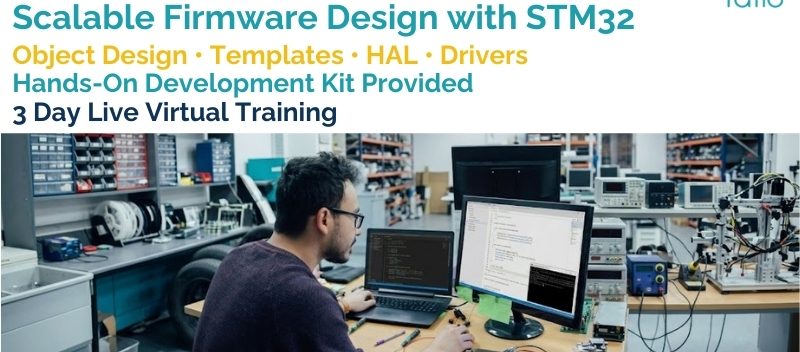
Embedded C++ for Microcontrollers is a three-day advanced course that teaches engineers how to design scalable and maintainable firmware using modern C++ techniques on microcontroller platforms.
Participants learn how object-oriented design, hardware abstraction layers and modular software architecture can be applied to embedded systems while developing firmware on STM32 microcontrollers.
The course includes hands-on exercises using the Ratio Embedded Systems Development Kit, shipped to participants before the course so they can complete practical labs on real embedded hardware.
Duration: 3 Days – Live Virtual Instructor-Led Training
This course is designed for business users, business leaders, and decision makers who want to understand the transformative potential of generative AI and its impact on their organizations. You’ll gain a comprehensive understanding of this technology, learn how it can be leveraged to drive innovation and efficiency, and explore the range of generative AI services available on Google Cloud. By the end of this course, you’ll be equipped to make informed decisions about implementing AI solutions.
This one-day course is composed of two parts – Getting started with Copilot for Microsoft 365 and Empower your workforce with Copilot for Microsoft 365 Use Cases. The first part of the course introduces you to Copilot for Microsoft 365, examines how you can use Copilot throughout the various Microsoft 365 apps, explores best practices for using Copilot and building effective prompts, and examines how you can extend Copilot with plugins and Graph connectors. The second part of this training content is really the heart of this course. Students perform a series of hands-on exercises involving seven Use Cases – Executives, Sales, Marketing, Finance, IT, HR, and Operations. These exercises focus on using Copilot in various Microsoft 365 apps (such as Word, PowerPoint, Outlook, and so on) to complete a series of common business-related tasks pertaining to each Use Case.
To complete the Use Case exercises in this course, each student must have access to a Microsoft 365 subscription (BYOS) in which they’re licensed to use Copilot for Microsoft 365. Each student must also have a Microsoft OneDrive account, since Copilot requires OneDrive to complete the file sharing tasks used throughout the Use Case exercises.

This Course will empower IT professionals and security analysts with the expertise to utilize Microsoft Intune and Microsoft Security Copilot effectively in device management and security operations. This course directs learners towards optimizing Intune for enhanced security and integrating Security Copilot to strengthen their organization’s security stance.
Learn about Microsoft Copilot for Security, an AI-powered security analysis tool that enables analysts to process security signals and respond to threats at a machine speed, and the AI concepts upon which it’s built.
The ‘Enterprise AI Governance Essentials – Foundations’ course provides a comprehensive roadmap for your organization to mature its AI governance capabilities. The primary goal is to guide you in establishing and scaling AI governance, ultimately positioning it as a strategic differentiator. The emphasis is on understanding the holistic approach, principles, and key considerations of AI governance from a strategic perspective.
The ‘Enterprise AI Governance Essentials – Optimization’ course provides a comprehensive roadmap for your organization to mature its AI governance capabilities. The primary goal is to guide you in establishing and scaling AI governance, ultimately positioning it as a strategic differentiator. The emphasis is on understanding the holistic approach, principles, and key considerations of AI governance from a strategic perspective.
This course is intended to give architects, engineers, and developers the skills required to help enterprise customers architect, plan, execute, and test database migration projects. Through a combination of presentations, demos, and hands-on labs
participants move databases to GCP while taking advantage of various GCP services.
This course covers how to move on-premises, enterprise databases like SQL Server to Google Cloud (Compute Engine and Cloud SQL) and Oracle to Google Cloud bare metal.
This course provides an overview of Google Cloud Monitoring, focusing on how to effectively monitor cloud systems. Participants will learn to use cloud Monitoring to view metrics across multiple cloud projects, understand different dashboard and chart types, create uptime checks, and utilize MQL for advanced monitoring.
Exam Prep: AWS Certified AI Practitioner (AIF-C01) is a one-day ILT where you learn how to assess your preparedness for the AWS Certified AI Practitioner (AIF-C01) exam. The AWS Certified AI Practitioner (AIF-C01) exam validates in-demand knowledge of AI, machine learning (ML), and generative AI concepts and use cases.
This intermediate-level course prepares you for the AWS Certified AI Practitioner (AIF-C01) exam by providing a comprehensive exploration of the exam topics. You’ll delve into the key areas covered on the exam, understanding how they relate to developing AI and machine learning solutions on the AWS platform. Through detailed explanations and walkthroughs of exam-style questions, you’ll reinforce your knowledge, identify gaps in your understanding, and gain valuable strategies for tackling questions effectively. The course includes review of exam-style sample questions, to help you recognize incorrect responses and hone your test-taking abilities. By the end, you’ll have a firm grasp on the concepts and practical applications tested on the AWS Certified AI Practitioner certification exam.
In this 1-day instructor-led training course, you will prepare for the AWS Certified Cloud Practitioner (CLFC02) exam. This course helps you understand what is important for the exam, how to approach different question types, and how to identify common misconceptions that appear on the test. The instructor will guide you through exam-focused reviews of each domain, highlighting frequently tested concepts, clarifying easily confused topics, and providing strategic approaches to question analysis. Through
targeted practice with exam-style questions, you will develop the specific knowledge and test-taking skills needed to succeed on the certification exam.
This course includes presentations, discussions, and guided practice with exam-style questions and scenario-based discussions. Each content module includes section slides aligned to the task statements in the domain followed by a walkthrough section of relevant questions.
In this 1-day instructor-led training course, you will prepare for the AWS Certified Data Engineer – Associate (DEA-C01) exam. This course helps you understand what is important for the exam, how to approach different question types, and how to identify common misconceptions that appear on the test. The instructor will guide you through exam-focused reviews of each domain, highlighting frequently tested concepts, clarifying easily confused topics, and providing strategic approaches to question analysis.
Through targeted practice with exam-style questions, you will develop the specific knowledge and testtaking skills needed to succeed on the certification exam.
This course includes presentations, discussions, and guided practice with exam-style questions and scenario-based discussions. Each content module includes section slides aligned to the task statements in the domain followed by a walkthrough section of relevant questions.
Exam Prep: AWS Certified Machine Learning Engineer – Associate (MLA-C01) is a one-day ILT where you learn how to assess your preparedness for the AWS Certified Machine Learning Engineer – Associate (MLA-C01) exam. The exam validates a candidate’s ability to build, operationalize, and maintain machine learning (ML) solutions and pipelines by using the AWS Cloud.
This intermediate-level course prepares you for the AWS Certified Machine Learning Engineer – Associate (MLA-C01) exam by providing a comprehensive exploration of the exam topics. You’ll delve into the key areas covered on the exam, understanding how they relate to developing AI and machine learning solutions on the AWS platform. Through detailed explanations and walkthroughs of exams tyle questions, you’ll reinforce your knowledge, identify gaps in your understanding, and gain valuable strategies for tackling questions effectively. The course includes review of exam-style sample questions, to help you recognize incorrect responses and hone your test-taking abilities. By the end, you’ll have a firm grasp on the concepts and practical applications tested on the AWS Certified Machine Learning Engineer – Associate (MLA-C01) exam.
This module provides a practical guide to using Microsoft 365 Copilot Chat’s prebuilt agents, which enable users to streamline tasks, retrieve information efficiently, and enhance productivity through AI-powered conversational tools.
This five-day FastTrack course (AZ800 and AZ801) is designed for IT professionals who configure advanced Windows Server services using on-premises, hybrid, and cloud technologies. These professionals manage and support an infrastructure that includes on-premises and Windows Server-based workloads hosted on Azure IaaS. The course teaches IT professionals how to leverage Azure’s hybrid capabilities, migrate virtual and physical server workloads to Azure IaaS, and manage and secure Azure VMs with Windows Server. The course also covers performing tasks related to high availability, troubleshooting, and disaster recovery. The course highlights various administrative tools and technologies, including Windows Admin Center, PowerShell, Azure Arc, Azure Automation Update Management, Microsoft Defender for Identity, Azure Security Center, Azure Migrate, and Azure Monitor.
The Palo Alto Networks Firewall Essentials: Configuration and Management (EDU-210) course is five days of instructor-led training that will help you to:
– Configure and manage the essential features of Palo Alto Networks next-generation firewalls
– Configure and manage Security and NAT policies to enable approved traffic to and from zones
– Configure and manage Threat Prevention strategies to block traffic from known and unknown IP addresses, domains, and URLs
– Monitor network traffic using the interactive web interface and firewall reports
Exclusive to Fast Lane / ITLS:
Additional Palo Alto Labs and extended lab hours after the course
– Palo Alto Networks Firewalls for High Availability Solutions
– Global Protect Remote Access VPN Lab
– Site-to-Site VPN Lab
– Destination NAT Lab
– Captive Portal & User-ID Lab
– Optional Lab for Expedition Tool (BPA)
Duration: 5 days
The Palo Alto Networks Firewall 11.0 Troubleshooting course is three days of instructor-led training that will help you:
– Use firewall tools, including the CLI, to investigate networking issues
– Follow proven troubleshooting methodologies that are specific to individual features
– Analyze advanced logs to resolve various real-life scenarios
– Solve advanced, scenario-based challenges
Exclusive to Fast Lane / iTLS:
Additional Palo Alto Labs and extended lab hours after the course
– Site-to-Site VPN Troubleshooting Lab
– Transit Traffic Troubleshooting Labs
Duration: 3 days
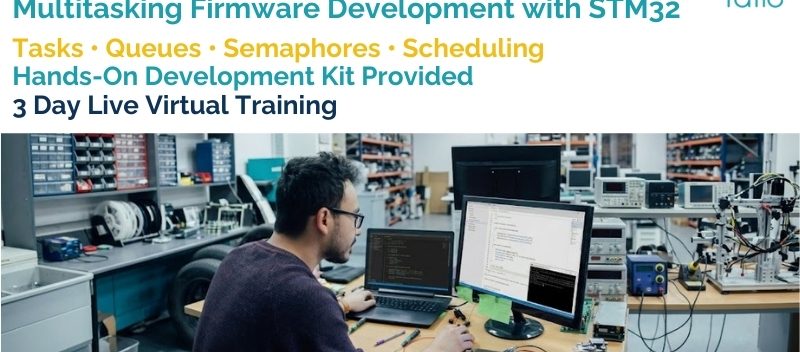
Real-Time Embedded Systems with FreeRTOS is a practical three-day course that introduces engineers to multitasking firmware development using a real-time operating system.
Participants learn how real-time embedded systems manage concurrent tasks, scheduling and communication while developing firmware applications using FreeRTOS on STM32 microcontrollers.
The course includes hands-on exercises using the Ratio Embedded Systems Development Kit, which is shipped to participants before the workshop so they can complete practical labs on real hardware throughout the training.
Duration: 3 Days – Live Virtual Instructor-Led Training
This course provides a comprehensive overview of Gemini Code Assist, an AI-powered tool designed to enhance software development workflows. Participants will learn how Gemini Code Assist can improve coding efficiency, reduce errors, and accelerate the software delivery lifecycle.
The course will cover core features such as code completion, code generation, and smart actions, along with best practices for integrating Gemini Code Assist into development environments. Fundamental concepts in AI-assisted coding and software development lifecycle optimization will be covered, along with practical demonstrations.
This course provides an introduction to Gemini Enterprise and NotebookLM Enterprise, AI-powered tools designed to enhance information discovery, knowledge management, and productivity within organizations. Participants will learn how to leverage Gemini Enterprise to extract insights from enterprise data and build custom applications. The course also covers NotebookLM Enterprise, focusing on its features for analyzing and synthesizing information from various sources.
This module explores the generation of code explanations, project documentation, and inline code comment documentation using the GitHub Copilot Chat extension for Visual Studio Code.
In this course, you will learn about the fundamental concepts, methods, and strategies for using generative AI. You will gain a solid understanding of use cases where generative AI can provide solutions and address business needs. Additionally, you will learn about practical insights into technologies related to generative AI and how you can use those technologies to solve real-world problems. By the end of the course, you will explore project planning and how to discuss implementation of generative AI in your organization.
In this course, you will learn how to leverage generative artificial intelligence (AI) within your organization. We’ll cover how to drive business value with generative AI, the use cases across various industries, and the considerations to implement generative AI safely and responsibly. The goal of this course is to provide you with the fundamental concepts and tools you’ll need to successfully lead generative AI initiatives within your organization.
In this course, you learn about the different challenges that arise when productionizing generative AI-powered applications versus traditional ML. You will learn how to manage experimentation and tuning of your LLMs, then you will discuss how to deploy, test, and maintain your LLM-powered applications. Finally, you will discuss best practices for logging and monitoring your LLM-powered applications in production.
In this course, you will take a journey from a broad overview of gen AI to understanding how to leverage gen AI and Google Cloud for organizational transformation.
This module examines how agents act as AI-powered assistants embedded within SharePoint and Microsoft Copilot Chat, providing real-time support by offering suggestions, automating processes, and helping users navigate through complex tasks.
This course teaches developers to utilize Azure Cosmos DB for NoSQL API and SDK. Students will learn query execution, resource configuration, SDK operations, and design strategies for non-relational data modeling and data partitioning.
This module introduces developers to the GitHub Copilot products, the benefits that GitHub Copilot provides to developers, the GitHub Copilot and GitHub Copilot Chat product features, and the GitHub Copilot extensions for Visual Studio Code.
This course is an interactive learning experience designed to provide an actionable set of steps to help your organizations implement a Cloud Financial Management strategy to maximize your cloud investment with Google Cloud. In this class, you will walk through the five pillars of Google Cloud FinOps and understand how your organization can work to implement these pillars in their own FinOps approach.
This course introduces participants to creating and deploying containerized applications on Google Kubernetes Engine (GKE). Through a combination of presentations, demos, and hands-on labs, participants explore and deploy solution elements, including infrastructure components such as pods and containers.
If you are new to Google Workspace, this training will equip you with the skills you need to be productive in the workplace.
Through a series of lectures, demonstrations, and hands-on activities, you will become proficient in the use of the following core Google Workspace applications: Gmail, Google Calendar, Google Drive, Google Docs, Google Sheets, Google Slides, Google Meet and Google Chat.
This course provides an introduction to using Terraform for Google Cloud. It enables learners to describe how Terraform can be used to implement infrastructure as a code and to apply some of its key features and functionalities to create and manage Google Cloud infrastructure. Learners will get hands-on practice building Google Cloud resources using Terraform.
GitHub Advanced Security (GHAS) plays a crucial role in enhancing the security posture of software development projects on GitHub. It provides a comprehensive set of tools and features designed to identify and address security vulnerabilities throughout the development lifecycle. By integrating security directly into the development process with GHAS, your team can build more secure and reliable software. The course will explore how to utilize GHAS to maximize security impact and understand GHAS and its role in the security ecosystem.
This course explores the use of AI in the context of GitHub Copilot, a generative AI tool for developers. It equips users with the knowledge and skills to use Copilot effectively while mitigating potential ethical and operational risks associated with AI usage.
GitHub Foundations introduces you to the fundamental concepts, features, and products of GitHub. You’ll discover the benefits of using GitHub as a collaborative platform and explore its core features, such as repository management, commits, branches, and merging. Through curated modules and hands-on exercises, you’ll gain a solid understanding of GitHub’s essential tools and be well-equipped to start contributing to projects and collaborating effectively within GitHub.
In this course, you’ll learn the basics of GitHub and gain a better understanding of its fundamental features with a hands-on exercise all within a GitHub repository. You’ll learn best practices for building, hosting, and maintaining a secure repository on GitHub.
This course equips Financial Services professionals with the skills to leverage Google AI tools, including Gemini, NotebookLM Enterprise, and Agentspace. You’ll learn to enhance financial analysis, reporting, and client communication, develop specialized tools like early warning systems and tailored investor narratives with Gemini Gems, securely query and synthesize information from diverse financial documents, and automate routine tasks and proactively monitor financial data. Implement AI-driven solutions effectively and ethically to streamline financial operations.
This course is designed to help financial services professionals learn how to use Google AI tools to streamline and enhance various financial processes.
Through a combination of presentations and demos, attendees will gain insights into leveraging Gemini, NotebookLM, and AgentSpace to automate tasks, improve data analysis, and derive actionable insights from financial data. The course aims to equip financial practitioners with the skills to implement AI-driven solutions effectively and ethically within the financial services industry.
This course equips professionals across various functions with the skills to leverage core Google AI tools; Gemini, NotebookLM, and Agentspace to transform daily workflows.
It will demonstrate how to utilize Gemini for enhanced communication, content generation, and initial data analysis. You’ll then leverage NotebookLM to securely query and synthesize vast information from diverse sources for accurate, grounded insights. Finally, you’ll explore Agentspace to automate complex routine administrative tasks and cross-application workflows. This course empowers professionals to implement AI-driven solutions effectively and ethically, reclaiming significant time, streamlining operations, and elevating professional output.
An optional Appendix provides additional content on developing specialized capabilities for custom content generation and workflow automation with Gemini Gems, as well as integrating NotebookLM and Gemini for a unified approach to comprehensive data synthesis and actionable report generation.
This course equips HR professionals with the skills to leverage Google AI tools, including Gemini, NotebookLM Enterprise, and Agentspace. You’ll learn to draft clear communications, enhance linguistic quality with Gemini Gems, synthesize policies using trusted sources, and automate complex HR processes for improved efficiency and time savings. Implement AI-driven solutions effectively and ethically to streamline HR operations.
This course is designed to help HR professionals learn how to use Google AI tools to streamline and enhance various HR processes. Through a combination of presentations and hands-on demos, attendees will gain insights into leveraging Gemini, NotebookLM, and Agentspace to automate tasks, improve communication, and derive actionable insights from HR data.
The course aims to equip HR practitioners with the skills to implement AI-driven solutions effectively and ethically.
This course equips legal professionals with the skills to leverage core Google AI tools; Gemini, NotebookLM, and Agentspace to transform daily legal workflows.
It will demonstrate how to utilize Gemini for enhanced legal research, communication, and initial document analysis. You’ll then leverage NotebookLM to securely query and synthesize vast legal knowledge for accurate, source-grounded analysis. Finally, you’ll explore Agentspace to automate complex legal review and compliance workflows. This course empowers legal professionals to implement AI-driven solutions effectively and ethically, reducing time, mitigating risk, and elevating strategic legal contributions.
An optional Appendix provides additional content on developing specialized Legal Gems for customized analysis frameworks and tailored policy drafting styles, as well as integrating NotebookLM and Gemini for a unified approach to data aggregation and actionable report generation.
This course is designed to help Marketing professionals learn how to use Google AI tools to streamline and enhance various marketing processes.
Through a combination of presentations and demos, attendees will gain insights into leveraging Gemini, NotebookLM, and AgentSpace to automate tasks, improve campaign effectiveness, and derive actionable insights from marketing data. The course aims to equip marketing practitioners with the skills to implement AI-driven solutions effectively and ethically within the Marketing business function.
This course equips media and entertainment professionals with the skills to leverage a suite of Google AI tools, including Gemini and NotebookLM, to transform the entire creative production pipeline.
It will demonstrate how to utilize Gemini in Workspace for rapid ideation, scriptwriting, and synthesizing creative feedback. You’ll then leverage NotebookLM Enterprise to securely query and synthesize vast information from diverse sources to build and maintain an in-depth, source-grounded knowledge base for world-building, research, and creative consistency. This course empowers creative professionals to implement AI-driven solutions that accelerate initial development, enhance research capabilities, and foster greater creative alignment.
An optional Appendix provides additional content on developing specialized capabilities for custom content generation and workflow automation with Gemini Gems, as well as integrating NotebookLM and Gemini for a unified approach to comprehensive data synthesis and actionable report generation.
This course is designed to help operations professionals learn how to use Google AI tools to streamline operational processes and enhance decision-making. Participants will explore the application of Gemini, NotebookLM, and AgentSpace in automating process monitoring, analyzing complex operational data, optimizing supply chain flows, and improving quality control. The course aims to equip operations teams with the skills to implement AI-driven solutions effectively for improved efficiency, resilience, and strategic oversight.
This course is designed to help Operations professionals learn how to use Google AI tools to streamline and enhance various operational processes. Through a combination of presentations and demos, attendees will gain insights into leveraging Gemini, NotebookLM, and AgentSpace to automate tasks, improve efficiency, and derive actionable insights from operational data. The course aims to equip operations practitioners with the skills to implement AI-driven solutions effectively and ethically within the Operations business function.
This course equips Sales professionals with the skills to leverage Google AI tools, including Gemini, NotebookLM Enterprise, and Agentspace. You’ll learn to draft personalized outreach, refine client communications with Gemini Gems for improved linguistic quality, analyze sales data for insights, and automate lead qualification and follow-up processes. Implement AI-driven solutions effectively and ethically to streamline sales workflows.
This course is designed to help Sales professionals learn how to use Google AI tools to streamline and enhance various sales processes. Through a combination of presentations and demos, attendees will gain insights into leveraging Gemini, NotebookLM, and AgentSpace to automate tasks, improve client engagement, and derive actionable insights from sales data.
The course aims to equip sales practitioners with the skills to implement AI-driven solutions effectively and ethically within the Sales business function.
In this course you will learn how to use various tools in Google Cloud to ingest, manage and leverage your data to derive insights in your research. You will be introduced to tools used on Google Cloud by researchers, then you will learn how to ingest your unstructured and structured data into Cloud Storage and BigQuery respectively. Next, you will learn how to curate your data and understand costs in Google Cloud. Finally you will learn how to leverage notebook environments and other Google Cloud tools for descriptive and predictive analysis.
This course uses lectures and labs to give you an overview of Google Cloud products and services. You learn about the value of Google Cloud and how to incorporate cloud-based solutions into your business strategies.
This is a course for cloud architects and engineers with existing AWS knowledge that compares Google Cloud solutions with AWS and guides professionals on their use. In this course, you’ll apply the concepts and technologies knowledge in AWS to explore the similarities and differences with concepts and technologies in Google Cloud. You’ll get hands-on practice building and managing Google Cloud resources.
This course provides a comprehensive introduction to Google Kubernetes Engine (GKE) and its essential concepts for cloud developers. Participants will explore containerization with Docker, Kubernetes architecture, and GKE deployment best practices. The course includes hands-on activities and demos to facilitate practical understanding and skill development in deploying and managing containerized applications on Google Cloud.
This course explores how to use Databricks and Apache Spark on Azure to take data projects from exploration to production. You’ll learn how to ingest, transform, and analyze large-scale datasets with Spark DataFrames, Spark SQL, and PySpark, while also building confidence in managing distributed data processing. Along the way, you’ll get hands-on with the Databricks workspace—navigating clusters and creating and optimizing Delta tables. You’ll also dive into data engineering practices, including designing ETL pipelines, handling schema evolution, and enforcing data quality. The course then moves into orchestration, showing you how to automate and manage workloads with Lakeflow Jobs and pipelines. To round things out, you’ll explore governance and security capabilities such as Unity Catalog and Purview integration, ensuring you can work with data in a secure, well-managed, and production-ready environment.
Explore the data science process and learn how to train machine learning models to accomplish artificial intelligence in Microsoft Fabric.
Explore the data warehousing process and learn how to load, monitor, secure, and query a warehouse in Microsoft Fabric.
This learning path introduces the foundational components of implementing a data lakehouse with Microsoft Fabric.
This module explores using GitHub Copilot Chat to develop improvements for an existing codebase. Exercises provide practical experience implementing GitHub Copilot suggestions that improve code quality, reliability, performance, and security.
This course covers methods and practices to implement data engineering solutions by using Microsoft Fabric. Students will learn how to design and develop effective data loading patterns, data architectures, and orchestration processes. Objectives for this course include ingesting and transforming data and securing, managing, and monitoring data engineering solutions. This course is designed for experienced data professionals skilled at data integration and orchestration, such as those with the DP-203: Azure Data Engineer certification.