Description
Course Overview
STM32 microcontrollers are widely used in modern embedded systems across industries including automotive, industrial control, robotics and IoT devices.
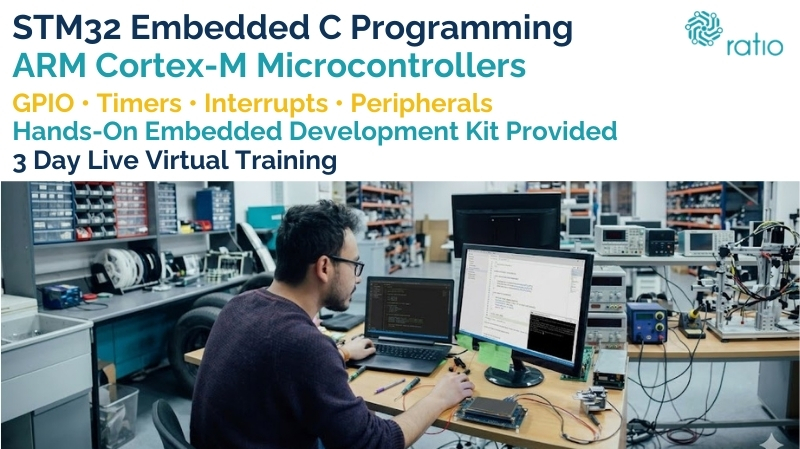
This hands-on training course introduces practical techniques for developing embedded firmware for STM32 microcontrollers using the C programming language.
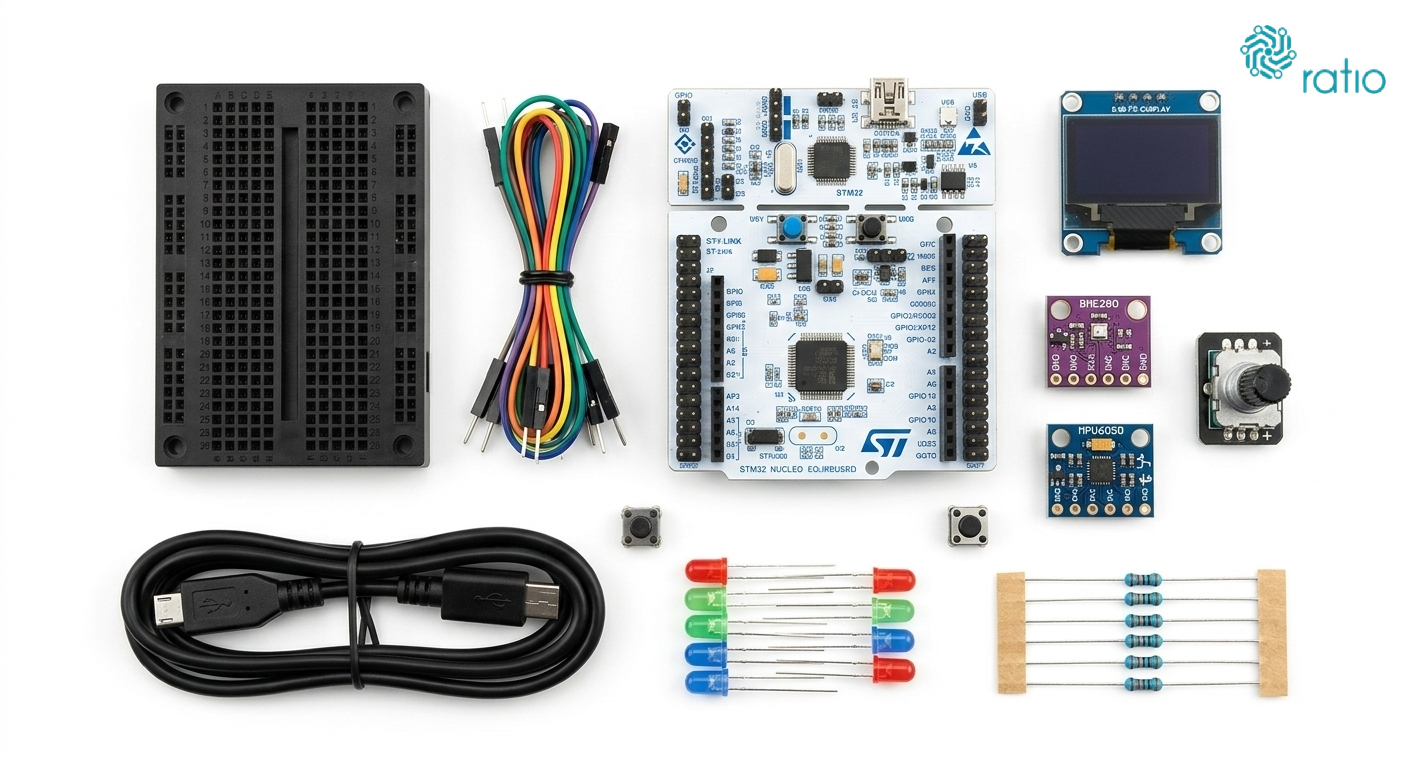
Participants work with STM32 development boards shipped prior to the course, enabling them to interact directly with hardware peripherals and complete practical development exercises.
Throughout the workshop engineers learn how firmware interacts with hardware through register-level programming, interrupts and peripheral configuration.
Hands-On Hardware Labs
Each participant receives an STM32 development board shipped prior to the course.
During the workshop participants complete practical exercises including:
-
configuring STM32 peripherals
-
interacting with external hardware
-
writing and testing embedded firmware
-
debugging real microcontroller applications
Working with real hardware ensures participants gain practical embedded development experience.
What You Will Learn
By the end of this course participants will be able to:
-
understand the architecture of STM32 microcontrollers based on ARM Cortex-M
-
configure and control GPIO and hardware peripherals
-
work with memory-mapped registers to interact with hardware
-
design interrupt-driven embedded applications
-
implement communication interfaces such as UART, SPI and I²C
-
structure maintainable embedded firmware
-
debug and test embedded systems running on STM32 hardware
-
develop practical firmware applications that interact with real hardware components
Participants will leave the workshop with practical experience building and debugging embedded applications using STM32 microcontrollers and the C programming language.
Course Outline
Day 1 – STM32 Architecture and Development Environment
Introduction to STM32 Microcontrollers
-
Overview of STM32 microcontroller families
-
Understanding ARM Cortex-M architecture
-
Embedded development workflows
Development Tools and Environment
-
Setting up the STM32 development environment
-
Introduction to development tools and compilers
-
Building and running embedded applications
Register-Level Hardware Control
-
Understanding memory-mapped peripheral registers
-
Configuring STM32 peripherals through register-level programming
-
Controlling external hardware components
Day 2 – Working with STM32 Peripherals
GPIO and Hardware Interaction
-
Configuring general-purpose input/output (GPIO)
-
Interacting with LEDs, switches and sensors
-
Managing digital input and output
Interrupt-Driven Embedded Systems
-
Configuring external and peripheral interrupts
-
Writing interrupt service routines (ISR)
-
Designing event-driven embedded applications
Communication Interfaces
-
Implementing UART communication
-
Working with SPI and I²C interfaces
-
Connecting STM32 systems with external devices
Day 3 – Embedded Firmware Development
Structuring Embedded Applications
-
Designing maintainable firmware architecture
-
Organising code for embedded systems
-
Managing peripheral interactions
Debugging Embedded Systems
-
Debugging firmware applications
-
Identifying hardware and software issues
-
Validating embedded behaviour
Building Complete Embedded Applications
-
Integrating peripherals into working embedded systems
-
Implementing practical firmware examples
-
Best practices for embedded development projects
Small Group Hands-On Training
To ensure participants gain practical experience, the course is delivered in smaller focused groups.
The hands-on format allows the instructor to support participants as they configure peripherals, develop firmware and troubleshoot embedded behaviour.
Places are limited due to the hardware-based lab format.
Who Should Attend
This course is suitable for:
-
Embedded Software Engineers
-
Firmware Developers
-
Electronics Engineers
-
Developers moving into embedded systems development
Requirements
Participants should have basic experience with the C programming language.
Familiarity with programming concepts will help participants gain the most value from the course.
Instructor Experience
This course is delivered by an experienced embedded systems engineer with extensive industry experience developing firmware for microcontroller-based systems, including ARM Cortex-M platforms such as STM32.
The instructor brings practical engineering experience to the workshop, helping participants understand how embedded firmware is designed, implemented and debugged in real development environments.
Key Features of This Course
-
Hands-On Hardware Labs
Each participant receives an STM32 development board shipped prior to the course, allowing them to complete practical exercises and interact with real hardware during the workshop. -
Practical Embedded Development
The course focuses on developing firmware for STM32 microcontrollers using the C programming language, with practical exercises covering peripherals, interrupts and communication interfaces. -
ARM Cortex-M Architecture
Gain a clear understanding of the ARM Cortex-M architecture used in STM32 devices, including how firmware interacts with hardware through registers and peripherals. -
Small Focused Training Groups
Courses are delivered in smaller groups to ensure participants receive guidance and support during the practical labs. -
Instructor-Led Technical Training
The workshop is delivered by an experienced embedded systems engineer with real-world firmware development experience. -
Live Virtual Delivery
Participate in a live instructor-led environment, allowing you to ask questions and work through embedded development challenges with expert guidance.
Why Train With Us
Our training is designed for engineers who want practical, real-world skills rather than theoretical overviews.
We focus on helping participants develop the capability to apply what they learn directly within their engineering environments.
Hands-On Learning
Participants work through practical exercises using STM32 development boards shipped prior to the course, allowing them to interact directly with hardware peripherals and firmware.
Real Engineering Experience
Courses are delivered by instructors with extensive industry experience developing embedded systems and firmware for microcontroller-based platforms.
Small Focused Groups
Workshops are delivered in smaller training groups, ensuring participants receive guidance and support throughout the practical exercises.
Relevant to Real Embedded Systems
The course content focuses on the skills engineers need when developing firmware for STM32 microcontrollers and ARM Cortex-M platforms used in real embedded systems.

Senior Software Architect & Development Instructor
Microsoft MVP | 30+ Years Engineering Experience
This course is presented by Peter
Peter brings more than 30 years of experience in software architecture, development, and technical training, helping engineering teams design, modernise, and improve complex systems across enterprise, cloud, embedded, and data-driven environments.
He has been exploring the role of AI in software engineering since the early wave of modern AI tooling, focusing on how development teams can use AI productively while maintaining strong engineering standards, governance, and architectural discipline.
Alongside his engineering background, Peter has a Master’s level background in Mathematics and is currently working towards a PhD, bringing deep analytical insight into how AI systems behave and how engineers should evaluate and integrate them responsibly.