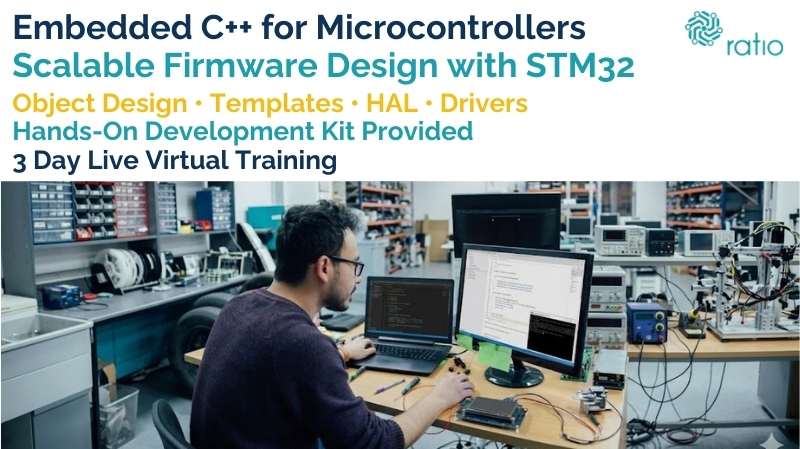
Description
Course Overview
As embedded systems grow in complexity, firmware must be structured in a way that is maintainable, reusable and scalable.
Modern C++ provides powerful tools that allow engineers to build structured firmware architectures while maintaining the performance required for microcontroller-based systems.
This course introduces the use of C++ for embedded development and demonstrates how modern language features can be used to design maintainable embedded software.
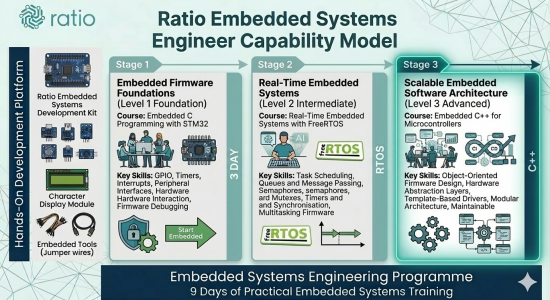
Participants explore how object-oriented design, hardware abstraction layers and modular driver architectures can improve firmware structure and support the development of larger embedded applications.
The course uses STM32 microcontrollers as the practical development platform and focuses on applying C++ techniques to real embedded firmware development scenarios.
Hands-On Embedded Development
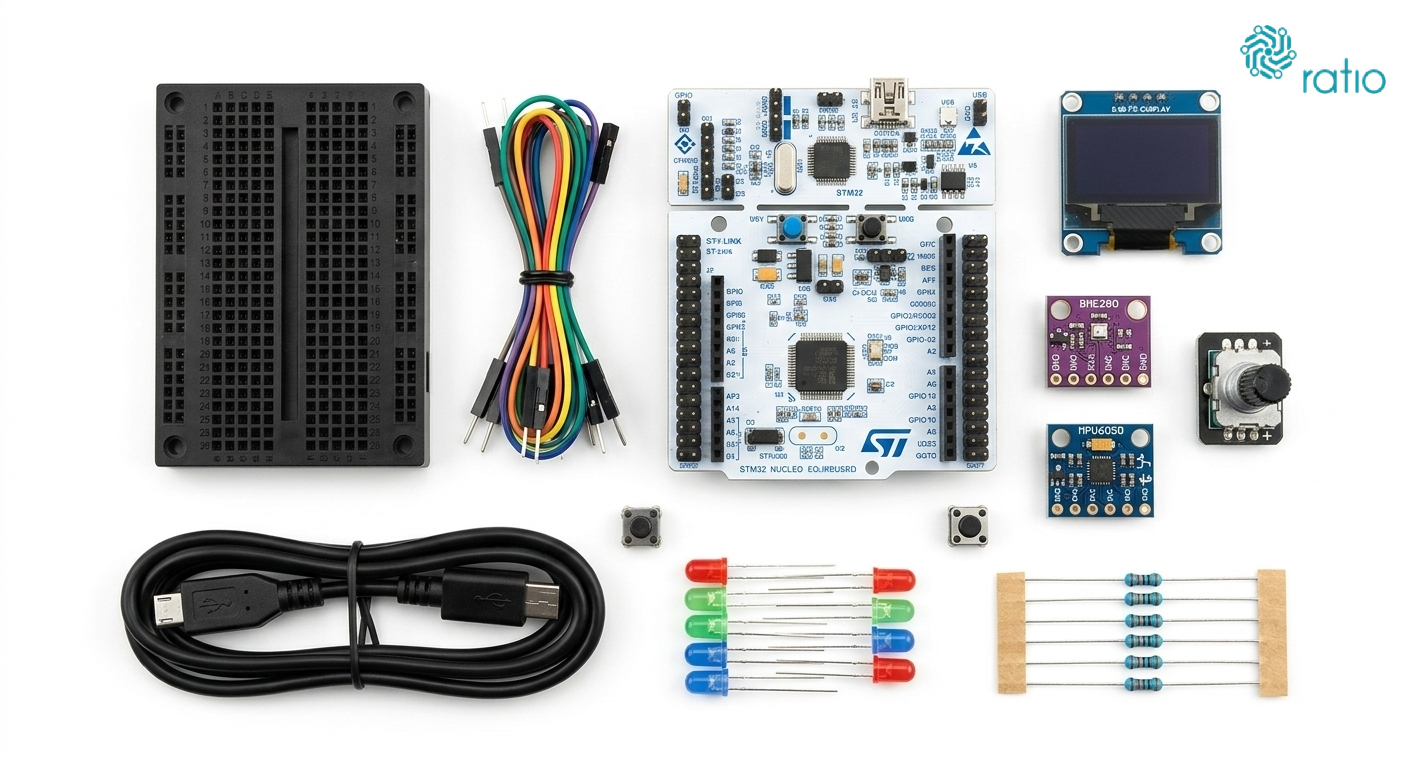
Participants complete practical exercises using the Ratio Embedded Systems Development Kit, which includes an STM32 development board and supporting hardware modules.
The development kit is shipped prior to the course and is used throughout the training exercises.
During the workshop engineers implement firmware that demonstrates:
• C++ class-based peripheral drivers
• modular firmware architecture
• reusable embedded software components
• structured embedded application design
The practical labs allow engineers to see how C++ can be applied effectively in embedded environments while maintaining efficiency and control over hardware behaviour.
Course Topics
Introduction to Embedded C++
• differences between C and C++ in embedded systems
• benefits of C++ for firmware architecture
• memory and performance considerations
• embedded toolchains and compilation.
Object-Oriented Firmware Design
• classes and encapsulation
• structuring peripheral drivers
• separating hardware access from application logic
• improving firmware maintainability.
Hardware Abstraction Layers
• designing abstraction layers for embedded systems
• separating hardware and application code
• creating reusable drivers
• portability considerations.
Templates and Generic Programming
• template-based driver design
• compile-time optimisation
• reusable embedded components.
Modular Embedded Architecture
• structuring larger embedded applications
• component-based firmware design
• managing dependencies.
Embedded Software Design Practices
• scalable firmware design
• organising embedded projects
• debugging and testing firmware.
Who Should Attend
This course is designed for engineers who already develop firmware in C and want to learn how modern C++ can be applied to embedded systems.
Typical participants include:
• embedded software engineers
• firmware developers
• engineers working with ARM Cortex-M microcontrollers
• developers building complex embedded applications.
Requirements
Participants should have experience with:
• C programming
• microcontroller firmware development
• compiling and debugging embedded software.
Previous experience with C++ is helpful but not required.
Instructor Experience
This course is delivered by an experienced embedded systems engineer with extensive industry experience developing firmware for microcontroller-based systems.
The instructor brings practical experience designing embedded firmware architectures and demonstrates how modern C++ techniques can be applied effectively in real embedded development environments.
Private Team Training
This course is also available as private training for engineering teams.
Private delivery allows the course to be adapted to the microcontroller platforms and development environments used within your organisation.
This format works particularly well for teams developing embedded products who want engineers to work through practical firmware exercises together.
Private training is available for teams of four or more engineers.
Hardware Development Kit
Participants complete the practical labs using the Ratio Embedded Systems Development Kit, which includes:
• STM32 microcontroller development board
• sensors and interface modules
• display module
• embedded development tools.
The development kit is shipped before the course and remains with participants after the training so they can continue experimenting with embedded development.
Technologies Covered
STM32
ARM Cortex-M
Embedded C++
Embedded firmware development
Hardware abstraction layers
Embedded software architecture
Client Feedback
Feedback from engineers who have attended our embedded systems training highlights the practical and hands-on nature of the workshops.
Participants particularly value the opportunity to work directly with real microcontroller hardware while exploring firmware development techniques that can be applied immediately in their own projects.
Typical feedback from attendees includes:
• “Excellent practical course with real embedded development examples.”
• “The instructor explained complex concepts clearly and related everything to real firmware development.”
• “Very useful for understanding how to structure embedded software projects.”
• “The hands-on exercises made the learning much easier to apply.”

Senior Software Architect & Development Instructor
Microsoft MVP | 30+ Years Engineering Experience
This course is presented by Peter
Peter brings more than 30 years of experience in software architecture, development, and technical training, helping engineering teams design, modernise, and improve complex systems across enterprise, cloud, embedded, and data-driven environments.
He has been exploring the role of AI in software engineering since the early wave of modern AI tooling, focusing on how development teams can use AI productively while maintaining strong engineering standards, governance, and architectural discipline.
Alongside his engineering background, Peter has a Master’s level background in Mathematics and is currently working towards a PhD, bringing deep analytical insight into how AI systems behave and how engineers should evaluate and integrate them responsibly.
Frequently Asked Questions (FAQs)
What are the core topics covered in the embedded C++ course?
The course covers practical techniques for developing embedded firmware with STM32 microcontrollers, including hardware interaction using C++, peripheral configuration, and creating real-world firmware solutions.
Who is the ideal participant for this embedded C++ training?
The training is ideal for embedded software engineers, firmware developers, electronics engineers, and those transitioning into embedded development with basic C++ programming skills.
What practical skills will I acquire from this course?
Participants will learn about STM32 architecture, peripheral configuration, memory management, interrupt handling, communication interfaces, and developing maintainable firmware through hands-on exercises.
What hardware will I use during the training?
Each participant will receive an STM32 development board to interact with hardware peripherals and perform practical exercises.
What prior knowledge is required to enroll in this course?
Attendees should have basic knowledge of the C++ programming language and general programming concepts to fully benefit from the training.